Why Synthetic Data is Used to Train Computer Vision: The Essential Guide
Why Synthetic Data is Used to Train Computer Vision: The Essential Guide
Synthetic Data & Simulation
11 min
Technical writer
John Fresco
Updated:
Posted:
There’s a moment every serious CV team hits. The model is fine. The metrics are defined. The sprint board looks almost believable. Then someone asks, “Cool, so where’s the training set?” and suddenly you’re talking about weeks of collection, months of labeling, and a budget line that makes everyone stare at the ceiling.
That’s the real reason synthetic data for computer vision has stopped being a niche trick and turned into a practical necessity. If you want to train computer vision models with synthetic data, you’re usually trying to solve the same cluster of headaches: computer vision synthetic datasets that are too small, too biased, too expensive, or too risky to collect. Put bluntly, why use synthetic data for AI? Because it’s how you make scaling computer vision training feel like engineering again, not a scavenger hunt.
Quick Summary: Why Use Synthetic Data?
Synthetic data is used to train computer vision (CV) models because real-world datasets have structural limits you can’t “work harder” to overcome.
Scale and speed matter first: synthetic pipelines can generate huge volumes of diverse images quickly, without scheduling shoots, waiting for weather, or hiring a labeling army. Annotation comes next: instead of humans tracing boundaries until their eyes glaze over, synthetic scenes emit pixel-perfect ground truth automatically, including segmentation masks, depth maps, bounding boxes, keypoints, and pose. Then there’s the ugly stuff, the long tail: rare defects, near-accidents, extreme lighting, weird occlusions. Synthetic data lets you create those safely and repeatedly. Privacy is another big one: synthetic people and environments reduce exposure to GDPR or HIPAA issues tied to real faces and real identity. Finally, bias: you can intentionally balance conditions and populations rather than inheriting whatever your camera happened to see.
The Data Bottleneck in Computer Vision
The problem: manual collection is slow, expensive, and error-prone
Real-world data sounds simple until you try to do it properly. You need access to locations. You need the right equipment. Sometimes you need safety approvals. If you’re filming in the wild, you need luck: weather, lighting, the “right” season. If you’re filming in a factory, you need permission, downtime windows, and often someone escorting you around like it’s a museum tour.
And then the labeling starts.
This is where projects quietly bloat. Bounding boxes are annoying but manageable. Segmentation is where time goes to die. Depth, pose, and 3D labels are worse. Also, humans are human. They get tired. They drift. Two annotators disagree on a boundary by a few pixels and suddenly your “ground truth” is more like “ground-ish truth.” You might not even notice until a model fails in production, which is the most expensive moment to discover your data was inconsistent.
So yes, it’s a data problem. But it’s really a pipeline design problem.
The solution: the shift from reactive collection to proactive generation
The old approach is reactive: you collect what the world gives you, then you label it, then you pray it contains the variation you need. The synthetic approach is more deliberate. You start with the question, “What must the model learn?” and you generate data to match that specification.
That shift is subtle but powerful. It changes the tone of the entire project. Instead of begging reality for edge cases, you author them.
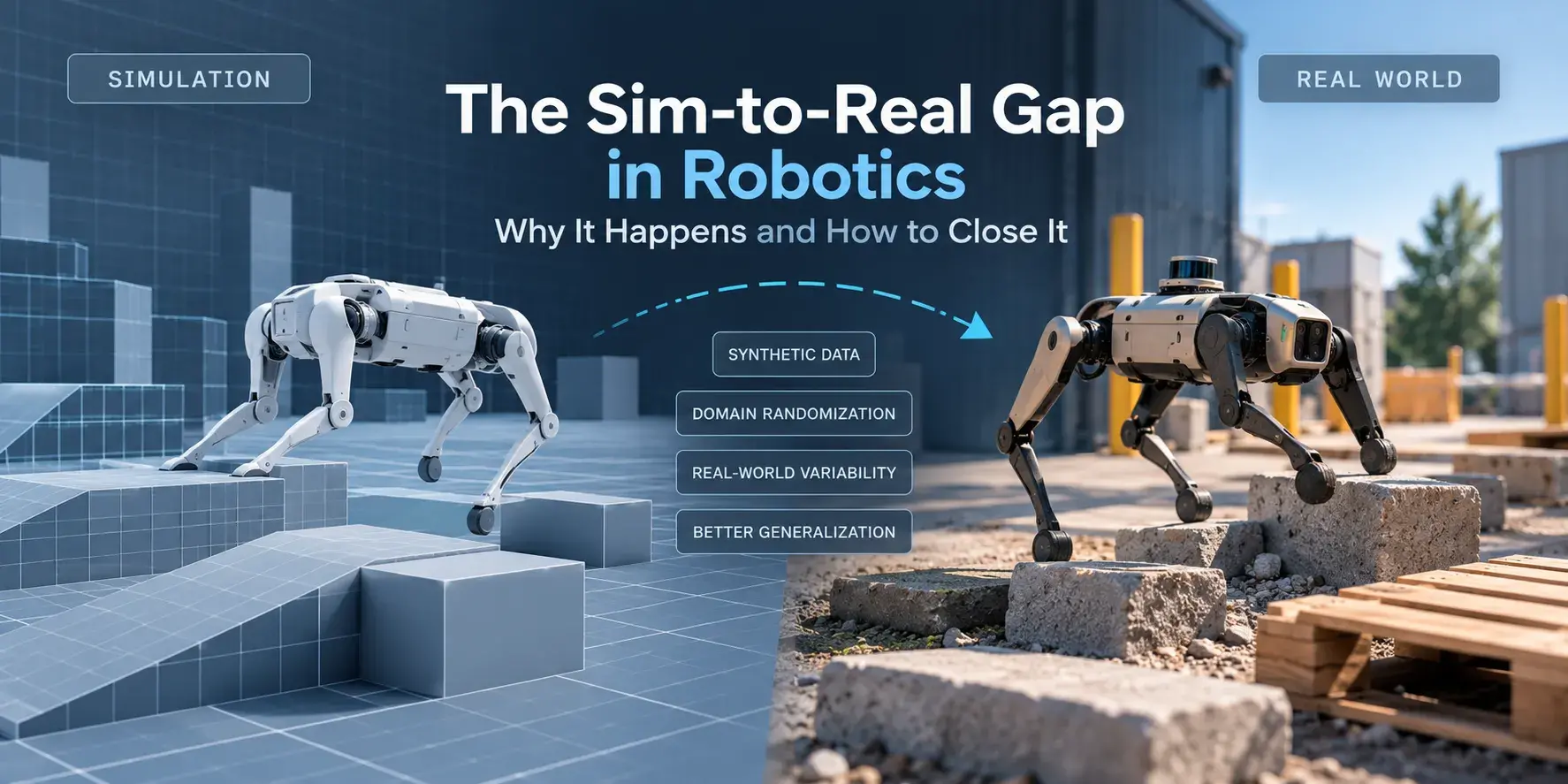
The concept: the sim-to-real paradigm
There’s a common misunderstanding here, so let’s say it plainly: the goal is not “make synthetic images indistinguishable from a DSLR photo on Instagram.” The goal is “does the model work in the real world.”
That’s sim-to-real in practice. You use simulation and rendering to cover the space of variation you care about, then you validate with real data and correct the gap where needed. Done well, synthetic data becomes a force multiplier. Done poorly, it becomes a pretty dataset that teaches the wrong lessons. The difference is not vibes. It’s evaluation and iteration.
5 Reasons Why Synthetic Data is Changing CV Training
1. Overcoming data scarcity and acquisition costs
If you’ve ever tried to build a dataset in the physical world, you already know the economics are unfriendly. Field capture requires gear, people, scheduling, and time. Outdoor environments add a second boss battle: weather and light. Industrial environments add another: access and safety. Healthcare adds the hardest one: compliance and consent.
Synthetic generation flips the math. Once the scene is set up, you can produce thousands of variations faster than you could organize one week of capture. You want different lighting? Change it. More occlusions? Add clutter. Different camera heights, different lens distortion, different materials, different backgrounds, different object poses? Adjust parameters. Generate again.
People often quote “10x to 100x cheaper,” and the exact multiplier depends on domain, but the direction is consistent: synthetic is more cost-effective because it turns data creation into a repeatable process rather than a recurring expedition. The hidden benefit is iteration. When each cycle is cheaper, you can run more cycles. That’s when model performance starts moving quickly.
2. 100% accurate, automated annotation
This is where synthetic data becomes almost unfair.
In a synthetic scene, the system knows what’s in the frame because it created the frame. That means ground truth is not guessed or inferred. It’s emitted. The label isn’t “what an annotator thinks they saw.” It’s “what the scene contains.”
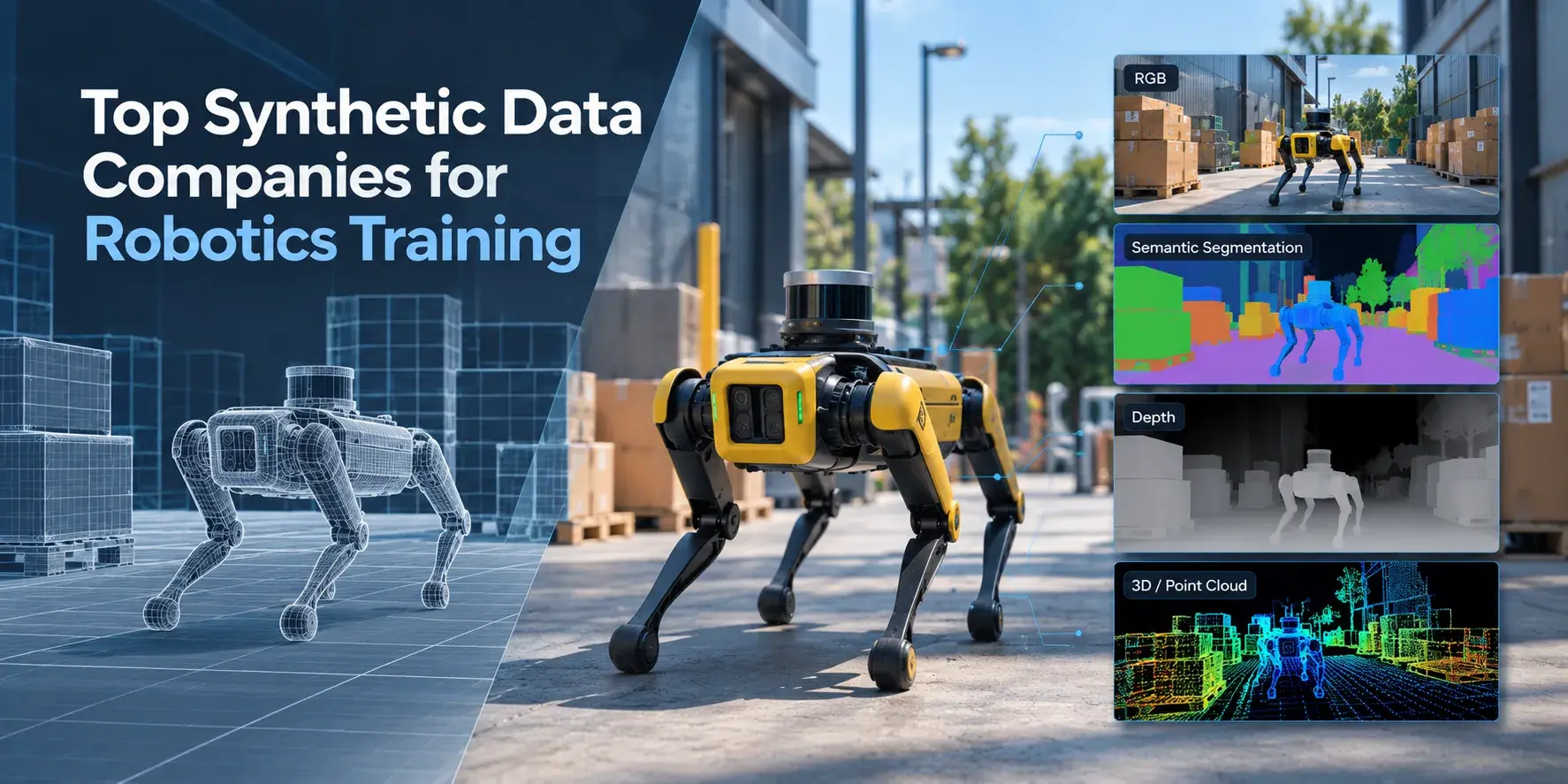
So instead of outsourcing annotation, you output it automatically. You can generate instance segmentation masks, semantic labels, keypoints, depth maps, 3D pose, optical flow, surface normals, and other modalities at the moment you render the image.
This matters more than most people admit. In practice, annotation noise can dominate performance variance. You can debate architectures all day, but if your labels are inconsistent, your model learns inconsistency. That’s one reason practitioners keep coming back to the importance of dataset quality, something you’ll see echoed in the Ultralytics ecosystem where labeling quality is treated as a major lever, not an afterthought.
A small caution, though, because reality always sends an invoice. Pixel-perfect labels for a rendered world are only useful if the rendered world teaches the right visual signals. You still need validation loops to confirm the synthetic distribution is aligned with production.
3. Solving the edge case problem
Most CV systems look great on the “normal” slice of reality. Then they meet the long tail.
A rare defect that shows up once every few thousand units. A drone flying in low visibility with sudden wind. A vehicle perception model handling glare, heavy rain, or an unusual obstacle configuration. The pattern is familiar: the cases that matter most are often the ones your dataset contains least.
Real-world collection creates data in proportion to frequency. That’s the problem. Synthetic generation lets you deliberately break that relationship. You can generate the rare cases at the frequency you need for training, without waiting months or taking unsafe actions. You can even stage scenarios you would never want to create in reality, because in the real world the cost is damage, injury, or downtime.
This is usually the turning point for skeptics. You can argue about photorealism. You can’t really argue with the economics of the long tail.
4. Built-in privacy and compliance
If your data contains real faces, real bodies, real homes, real hospital settings, or anything that looks like identifiable personal information, you are stepping into a maze of legal and operational constraints. GDPR in Europe is the one everyone mentions first, and in healthcare the HIPAA conversation is unavoidable. Even outside regulated spaces, enterprise security teams increasingly ask hard questions about training data provenance and handling.
Synthetic data can reduce that exposure because synthetic people are not real people. There’s no individual to consent, no right-to-erasure request tied to a specific person, no biometric identity to protect. It doesn’t remove the need for responsible governance, but it changes the risk profile and removes a lot of friction that slows teams down.
It’s worth noting that the “traditional” world still exists and serves a purpose. Companies like Digital Divide Data operate in that real-world pipeline, emphasizing secure, compliant data services for organizations that must work with real data. That contrast is helpful. When real data is required, you need strong controls. When synthetic can do the job, you avoid inheriting the burden in the first place.
5. Intentional bias correction
Bias in CV datasets is often not malicious. It’s lazy physics. You collect what’s easy to collect.
So you end up with too much daylight, not enough dusk. Too many clean backgrounds, not enough clutter. One geography, one factory line, one supplier, one kind of camera. Then you deploy and the model underperforms in conditions it barely saw.
Synthetic generation gives you the option to fix this proactively. You can create balanced distributions across lighting, weather, camera angles, materials, backgrounds, and for human-centric tasks, across demographic attributes in synthetic humans. You’re not stuck with whatever reality handed you during a three-week capture window.
And frankly, in some applications, this moves from “nice improvement” to “responsible design.” If you can create balanced training data and you choose not to, you’re accepting avoidable failure modes.
Industry Use Cases: Where Synthetic Data is Standard
Autonomous driving is the obvious headline. Not because real driving data is useless, but because the tail is too big. Rare corner cases, odd road layouts, unusual weather, unexpected obstacles. You can’t drive enough miles to collect the whole distribution efficiently, so simulation and synthetic data become the coverage engine.
Retail and security have a different driver: privacy. Person re-identification and tracking systems need variation across clothing, angles, lighting, and camera placement, but collecting real footage at scale can be a compliance minefield. Synthetic humans can cover a huge range of appearances and contexts without collecting identifiable data from actual people.
Healthcare is both privacy and scarcity at once. Rare pathologies are rare. Data sharing is constrained. Digital twins and synthetic augmentation can help fill gaps, especially when paired with careful validation and clinical oversight.
Manufacturing is where synthetic data feels almost made for the problem. A well-run line produces few defects, which is great for the business and terrible for the dataset. Synthetic defect generation lets you train robust detectors without waiting forever or intentionally producing bad parts.
Designing a Hybrid Data Strategy
Here’s the part people don’t always want to hear: the strongest production systems usually aren’t “synthetic only.” They’re hybrid.
Synthetic data is excellent for breadth. It covers variation and edge cases quickly. It gives you clean, consistent ground truth. Real data anchors you to the messiness of actual sensors: noise, lens quirks, unexpected backgrounds, those tiny visual cues you didn’t think mattered until they did.
So what’s the “golden ratio”? Honestly, it depends. Anyone who claims one magic number is selling something. Still, a practical pattern shows up again and again: start synthetic-heavy to cover the space, then use a smaller, targeted real dataset to calibrate and fine-tune. If you do the evaluation honestly, you can adjust the blend based on what the model is getting wrong.
The trick is not the ratio itself. It’s the discipline around testing. You need real-world test sets that match deployment. You need slices for the hard scenarios. You need to watch performance drift as conditions change. Otherwise you’ll optimize the wrong thing and feel good right until production proves you wrong.
Conclusion: Synthetic Data as a Competitive Advantage
Synthetic data for computer vision isn’t a shortcut. It’s what you use when you decide the data pipeline should behave like engineering instead of chaos.
When teams get this right, data stops being something you “go collect.” It becomes something you manufacture. You specify what the model needs, you generate it, you label it automatically, you test in realistic conditions, and you iterate. Fast.
That’s also where platforms matter. A scattered toolchain can generate images, sure, but the competitive advantage comes from a unified workflow: synthetic generation, ground truth, hybrid dataset management, evaluation loops, and continuous optimization tied to real deployment feedback.
Ready to scale training without scaling labeling pain? Explore Vivid 3D workflows for visual data generation and computer vision delivery, built around that factory-model approach to datasets.









.png)