Visual Data Infrastructure for Robotics & Physical AI
Physical AI Infrastructure Synthetic
Visual Data Robot Perception
Simulation-Ready Assets Industrial
Inspection Warehouse Automation
Robotic Manipulation
Drones & Autonomous
Robotic Manipulation Drones
Autonomous Systems Computer Vision as a Service
The Visual Data Engine for Physical AI
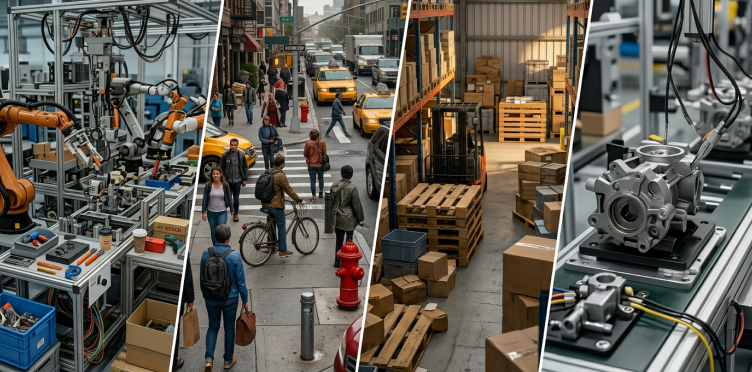
Physical AI systems need visual data that reflects real-world complexity:
lighting changes
clutter
occlusion
rare defects
unusual poses
damaged parts
sensor variation
unsafe edge cases
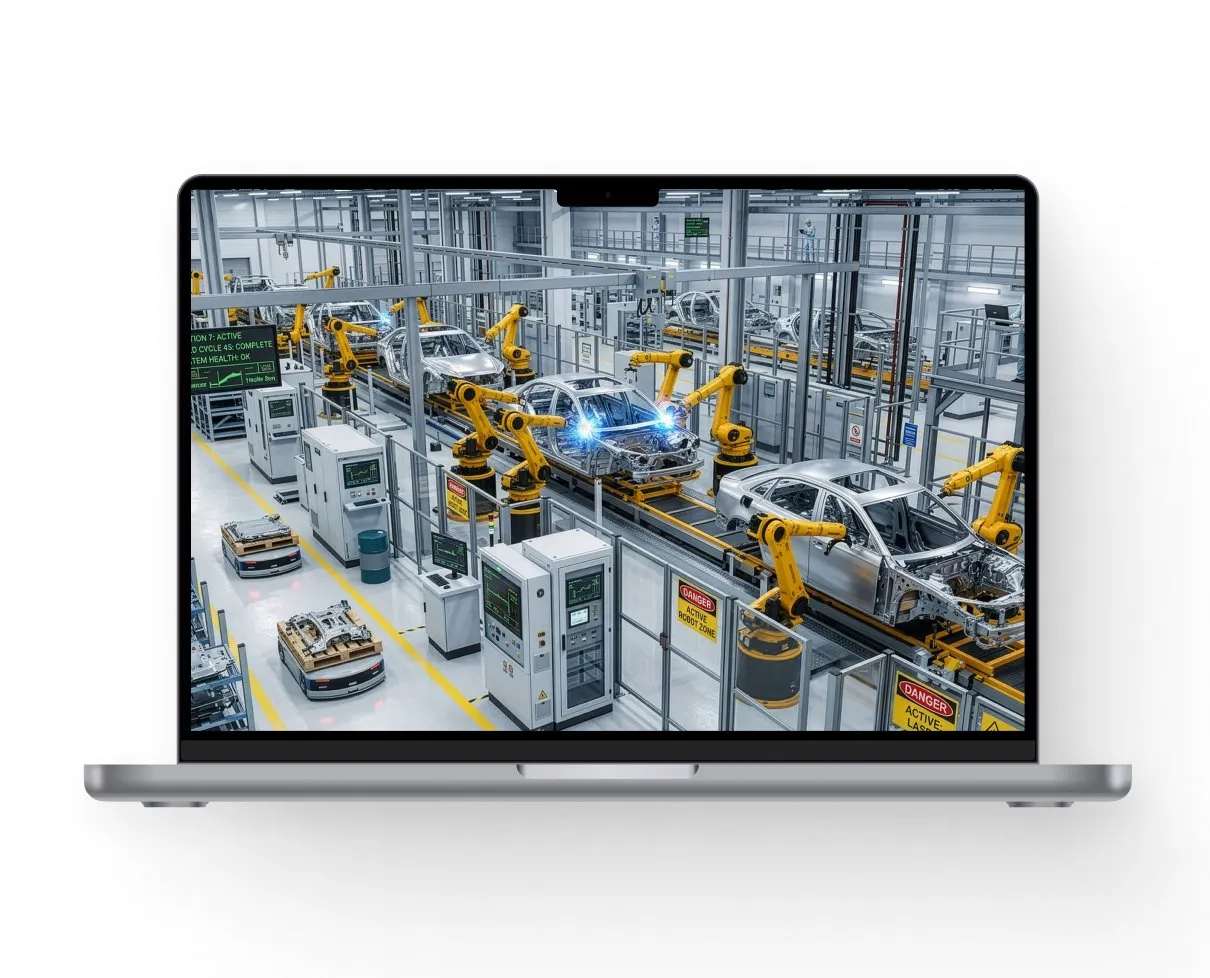
Vivid 3D creates simulation-ready 3D environments and labeled synthetic datasets so robotics teams can train, evaluate, and improve perception models before real-world deployment.
Collecting enough real-world images, videos, and sensor data takes time, especially when teams need many object types, environments, lighting conditions, camera angles, and operating scenarios.
Manual Ground Truth Does Not Scale
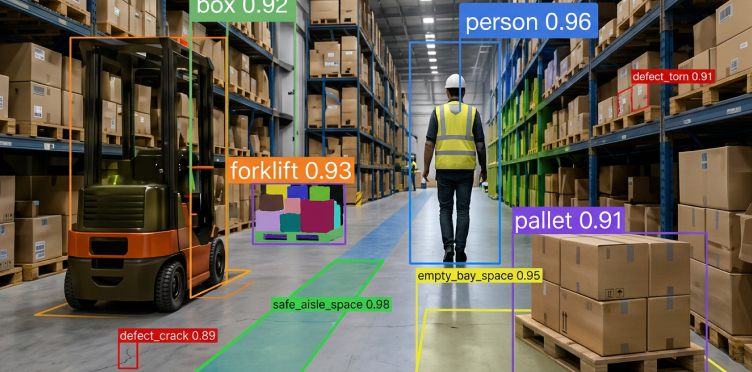
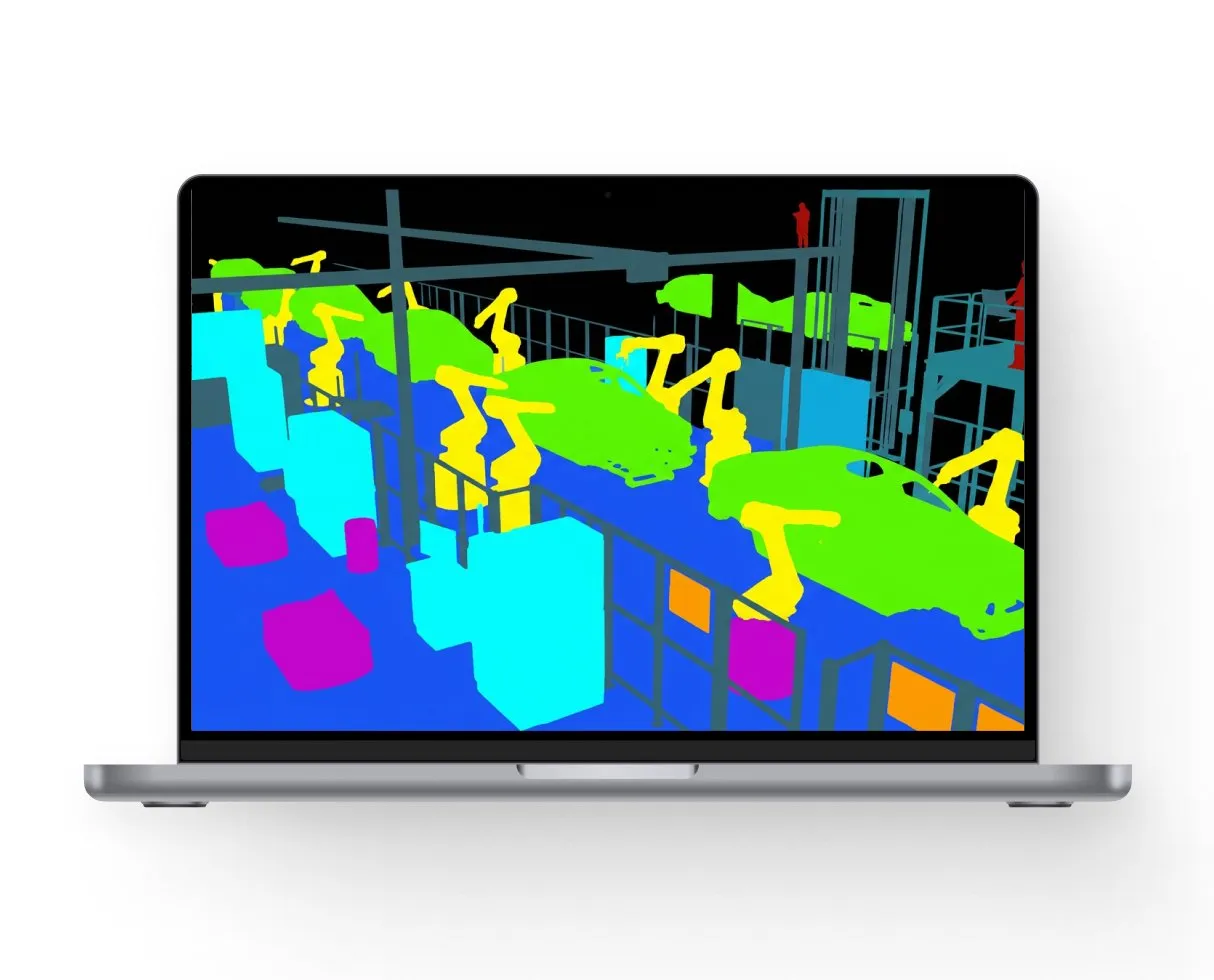
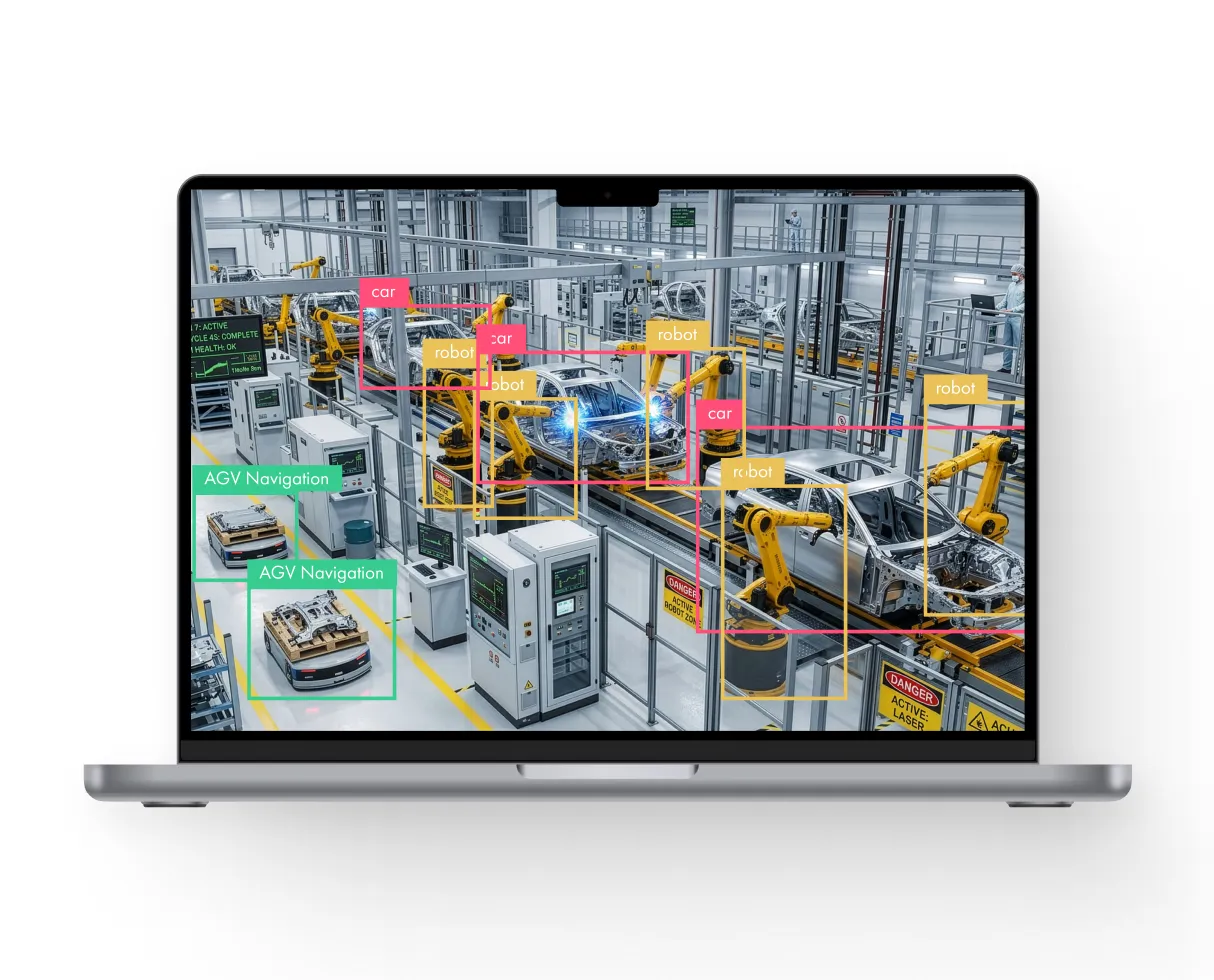
Robotics datasets often require precise labels such as segmentation masks, bounding boxes, keypoints, depth, and 6D pose. Creating this ground truth manually is slow, costly, and difficult to keep consistent.
Edge Cases Are Hard to Capture
Robots need to handle rare and unusual situations, but defects, clutter, damaged parts, uncommon object positions, and unsafe events are difficult to capture naturally.
Unsafe Scenarios Are Hard to Reproduce
Some physical-world scenarios are too risky, expensive, or impractical to reproduce during early model training and validation.
Multimodal Sensor Data Is Difficult to Scale
Physical AI teams may need RGB, depth, LiDAR-style data, IR, point clouds, and multi- camera views. Capturing, aligning, and labeling this data at scale is complex.
Move beyond data generation. Vivid 3D can support dataset design:
Model training
Validation
Testing
Deployment workflows for perception
Visual AI use cases
Simulation-Ready 3D Assets
Train models that help robots detect, classify, segment, and understand objects in physical environments.
Object detection and classification
Semantic and instance segmentation
Obstacle and zone detection
Navigation and scene understanding data
Synthetic Dataset Engine
Generate synthetic visual datasets from controlled 3D environments. Create the exact scenarios your model needs:
lighting changes
Сlutter
Сamera angles
Оcclusion
Defects
Damaged parts
Rare edge cases
Automatic Ground Truth
Export training-ready labels automatically:
Including bounding boxes
Segmentation masks
Depth
Keypoints
6D pose
Point clouds
Custom metadata
Computer Vision as a Service
Move beyond data generation. Vivid 3D can support dataset design:
Model training
Validation
Testing
Deployment workflows for perception
Visual AI use cases
Simulation-Ready 3D Assets
Train models that help robots detect, classify, segment, and understand objects in physical environments.
Object detection and classification
Semantic and instance segmentation
Obstacle and zone detection
Navigation and scene understanding data
Synthetic Dataset Engine
Generate synthetic visual datasets from controlled 3D environments. Create the exact scenarios your model needs:
lighting changes
Сlutter
Сamera angles
Оcclusion
Defects
Damaged parts
Rare edge cases
Automatic Ground Truth
Export training-ready labels automatically:
Including bounding boxes
Segmentation masks
Depth
Keypoints
6D pose
Point clouds
Custom metadata
Built for Robotics and Computer Vision Teams
Real-World Data Is Slow
Collecting enough real-world images, videos, and sensor data takes time, especially when teams need many object types, environments, camera angles, and operating conditions.
Manual Labeling Is Expensive
Robotics datasets often need detailed labels such as segmentation masks, bounding boxes, keypoints, depth, and 6D pose. Creating these labels manually is slow and costly.
Rare Edge Cases Are Missing
Robots need to handle unusual situations, but rare defects, uncommon object positions, damaged parts, clutter, and unsafe scenarios are hard to capture naturally.
Unsafe Scenarios Are Hard to Capture
Some robotics scenarios are too risky, expensive, or impractical to reproduce during early model training.
Sensor Data Is Difficult to Scale
Robotics teams may need RGB, depth, LiDAR-style data, IR, point clouds, and multi-camera views. Collecting and aligning this data at scale can be difficult.
Sim-to-Real Gaps Slow Deployment
Models trained in controlled environments still need to perform in real-world conditions. Synthetic data helps create more variation before deployment and supports stronger validation workflows.
Use Cases for Physical AI Teams
Human Task Understanding
Generate visual data for robots and Physical AI systems learning how people use objects, tools, machines, products, and workspaces in real-world tasks.
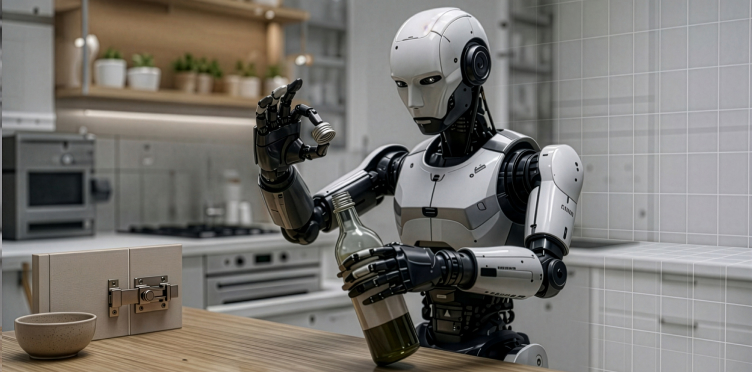
Manipulation and Object Handling
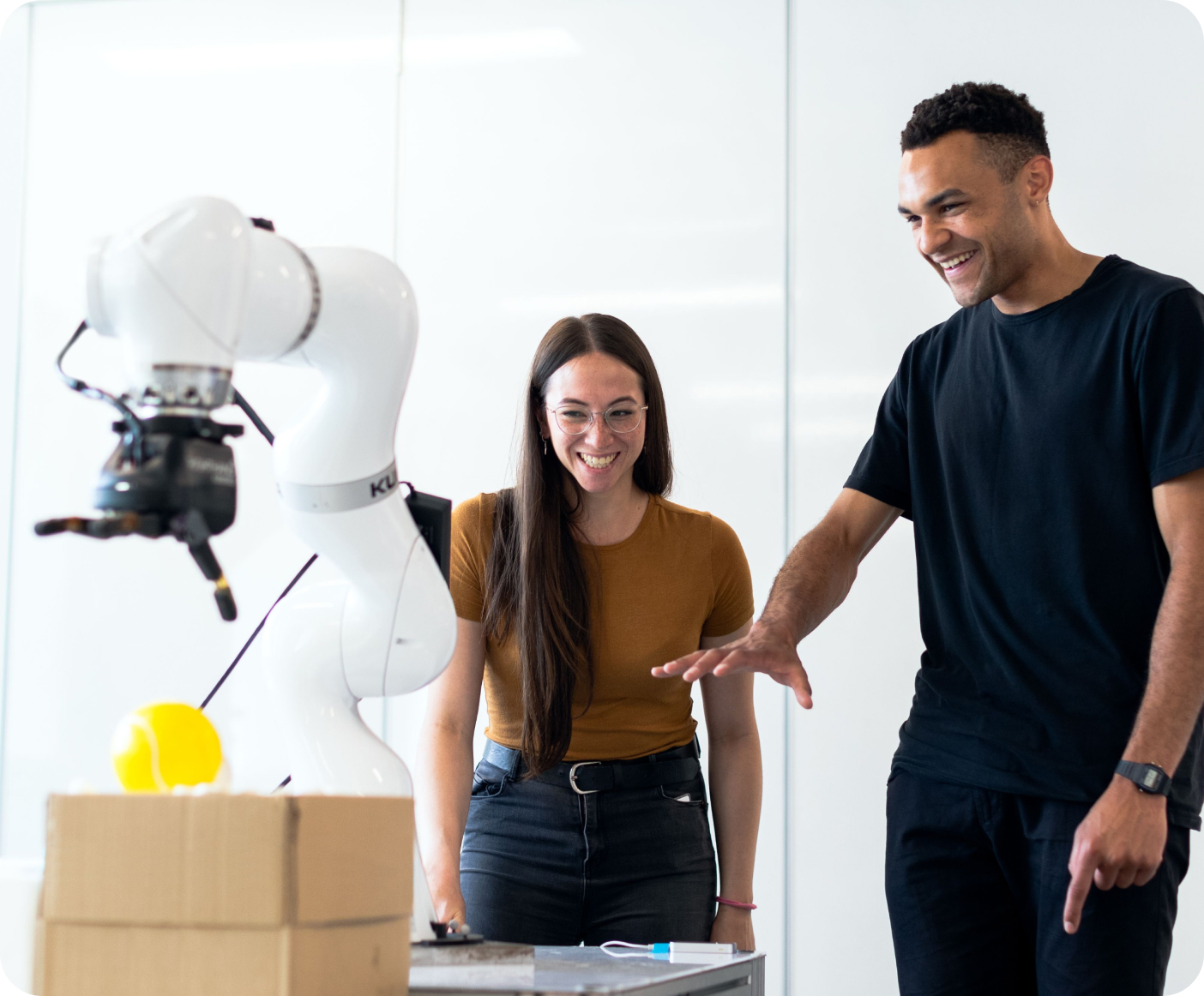
Create synthetic datasets for robot arms, grippers, hands, mobile manipulators, and humanoid systems learning to pick, hold, rotate, open, close, carry, assemble, and operate objects.
Visual Perception Training
Create synthetic visual data for Al models that detect, classify, segment, and localize objects, spaces, people, defects, and edge cases in the physical world.
Workplace and Industrial Task Simulation
Build realistic 3D scenarios for tasks such as assembly, packing, sorting, restocking, inspection, maintenance, machine operation, warehouse handling, and assisted service.
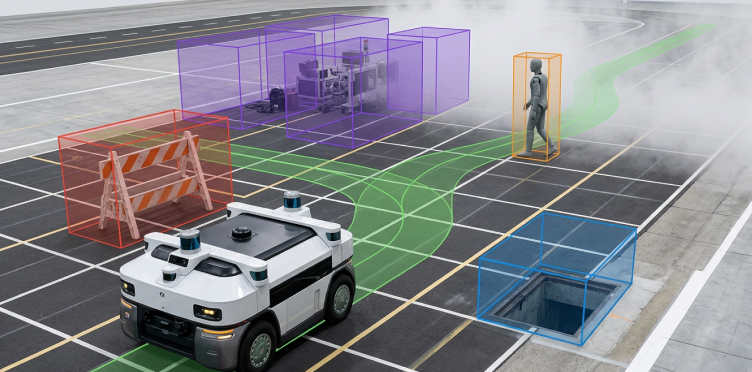
Autonomous Navigation Scenarios
Build controlled scenarios for obstacle detection, route understanding, safety zones, low-visibility conditions, restricted areas, and unsafe edge cases.
Visual Perception Training
Create synthetic visual data for Al models that detect, classify, segment, and localize objects, spaces, people, defects, and edge cases in the physical world.
Example Physical AI Applications
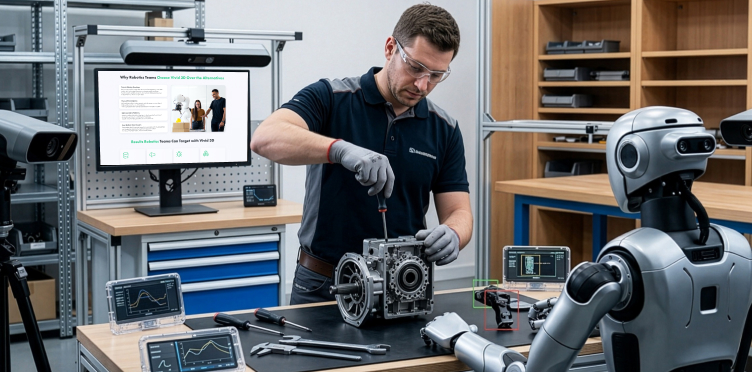
Spare Part Recognition and Matching
Identify the exact component from a user photo and match it to the correct SKU for ordering, service, warranty, or field support.
Automated Quality Inspection
Train inspection models to detect product defects, assembly errors, missing components, wear, corrosion, and manufacturing anomalies.
Warehouse Robot Perception
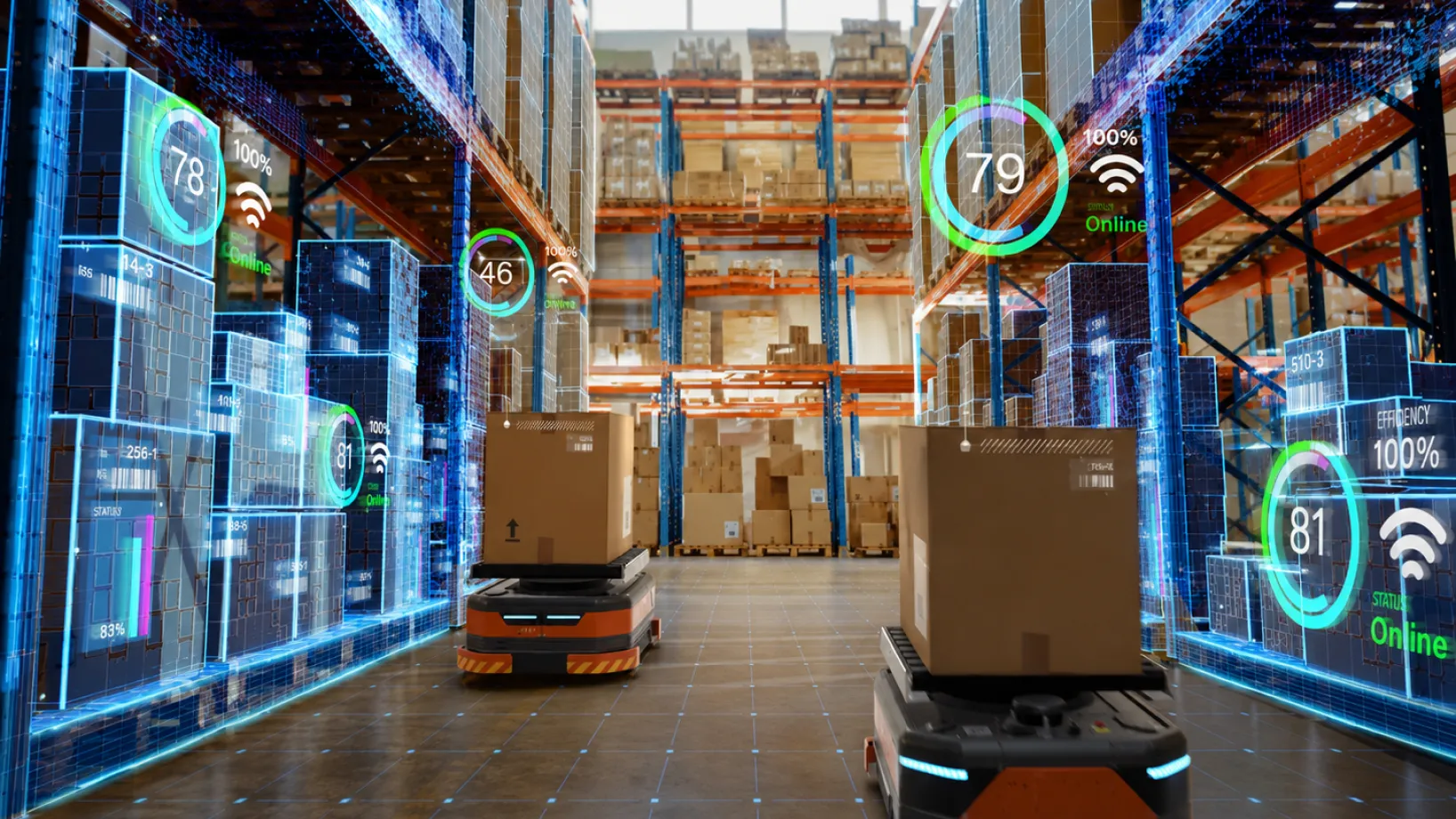
Generate synthetic warehouse scenes for object detection, obstacle recognition, shelf detection, pallet tracking, and AMR navigation.
Use CAD files, product references, object libraries, or existing 3D content as the foundation for synthetic data generation.
Step 2
Define Scenarios and Labels
Set up the environments, camera positions, lighting, object variations, defects, edge cases, and annotation types your model needs.
Step 3
Generate Synthetic Datasets
Produce RGB images, video, depth, segmentation masks, bounding boxes, keypoints, 6D pose, point clouds, and custom metadata.
Step 4
Train, Test, and Deploy
Use generated datasets to train perception models, validate edge cases, improve performance, and prepare for real-world deployment.
Works with Your Existing AI and Robotics Stack
Vivid 3D is designed to support modern computer vision, robotics, and MLOps pipelines.
Supported outputs can include:
COCO
YOLO
KITTI
Custom dataset formats
RGB
Depth
Point clouds
LiDAR-style data
Radar-style data
Multi-camera sensor views
Segmentation masks
Bounding boxes
6D pose
Keypoints

Custom metadata
IR
Why Robotics Teams Choose Vivid 3D Over the Alternatives
Generic Robotics Simulators
Simulators are powerful, but they often require specialized engineering, custom asset creation, and complex setup before teams can generate usable training data.Vivid 3D combines simulation-ready 3D content, synthetic dataset generation, and Computer Vision as a Service in one workflow.
Manual Data Collection
Real-world data collection is slow, expensive, and often misses rare cases. Manual labeling adds more time, cost, and inconsistency. Vivid 3D generates labeled visual data automatically from controlled 3D scenes.
Data Annotation Platforms
Annotation platforms help label existing data, but they do not solve the problem of missing data, rare scenarios, or product-specific edge cases. Vivid 3D creates the missing data before it exists in the real world.

Basic Synthetic Data Vendors

Many synthetic data tools generate images, but do not provide a full 3D content pipeline, asset management, model training support, and deployment workflow. Vivid 3D is a Visual Data Platform, not just a dataset generator.
Results Robotics Teams Can Target with Vivid 3D
Faster dataset creation
Lower manual labeling effort
Better rare-case coverage
Reusable 3D visual data assets
Shorter computer vision iteration cycles
Scalable synthetic data pipeline
Computer Vision as a Service from dataset to deployment
More controlled model testing
Trusted by teams building 3D and AI ready pipelines
FAQ
How is synthetic data used in robot perception?
Synthetic data is used to train computer vision models that help robots detect objects, understand scenes, avoid obstacles, inspect parts, estimate object pose, and operate in physical environments. Vivid 3D creates controlled visual datasets with labels that can be used for model training, testing, and iteration.
What makes synthetic robotics data different from regular image datasets?
Regular image datasets depend on what was already captured in the real world. Synthetic robotics data can be generated around the exact objects, environments, camera angles, lighting conditions, defects, occlusion levels, and edge cases your model needs to learn.
Can synthetic data reduce manual annotation work?
Yes. Since synthetic data is generated from controlled 3D scenes, labels can be created automatically. This can reduce the need for manual labeling while still supporting outputs such as bounding boxes, segmentation masks, depth, keypoints, 6D pose, and custom metadata.
How does Vivid 3D help with rare edge cases?
Vivid 3D can generate scenarios that are difficult, expensive, unsafe, or uncommon in real-world collection. This can include unusual object positions, damaged parts, low visibility, cluttered environments, occlusion, rare defects, lighting variation, and sensor-position changes.
Do robotics teams still need real-world data?
Yes. Synthetic data is usually strongest when combined with real-world validation data. It helps teams scale coverage and test edge cases faster, while real-world data is used to validate performance before deployment.
What do we need to start a robotics dataset pilot?
A pilot usually starts with a clear model objective, target objects or environments, preferred labels, sample real images if available, and any existing CAD files, 3D assets, product references, or sensor requirements. Vivid 3D can then define the dataset scope and generate the first controlled training scenarios.
Build Your Visual Data Engine for Physical AI with Vivid 3D
Let’s create a synthetic data pilot around your assets, environments, model objectives, and deployment constraints.