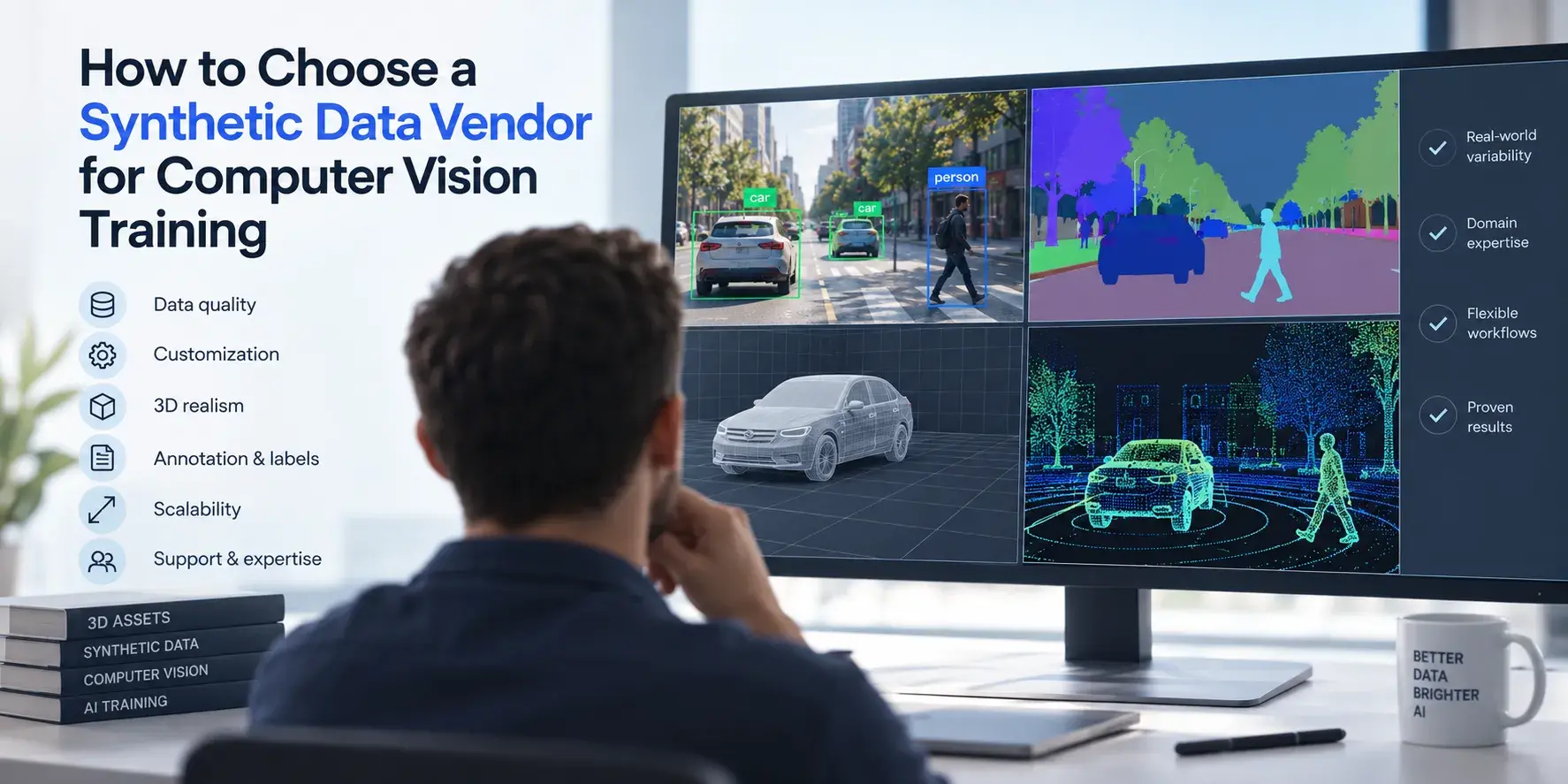
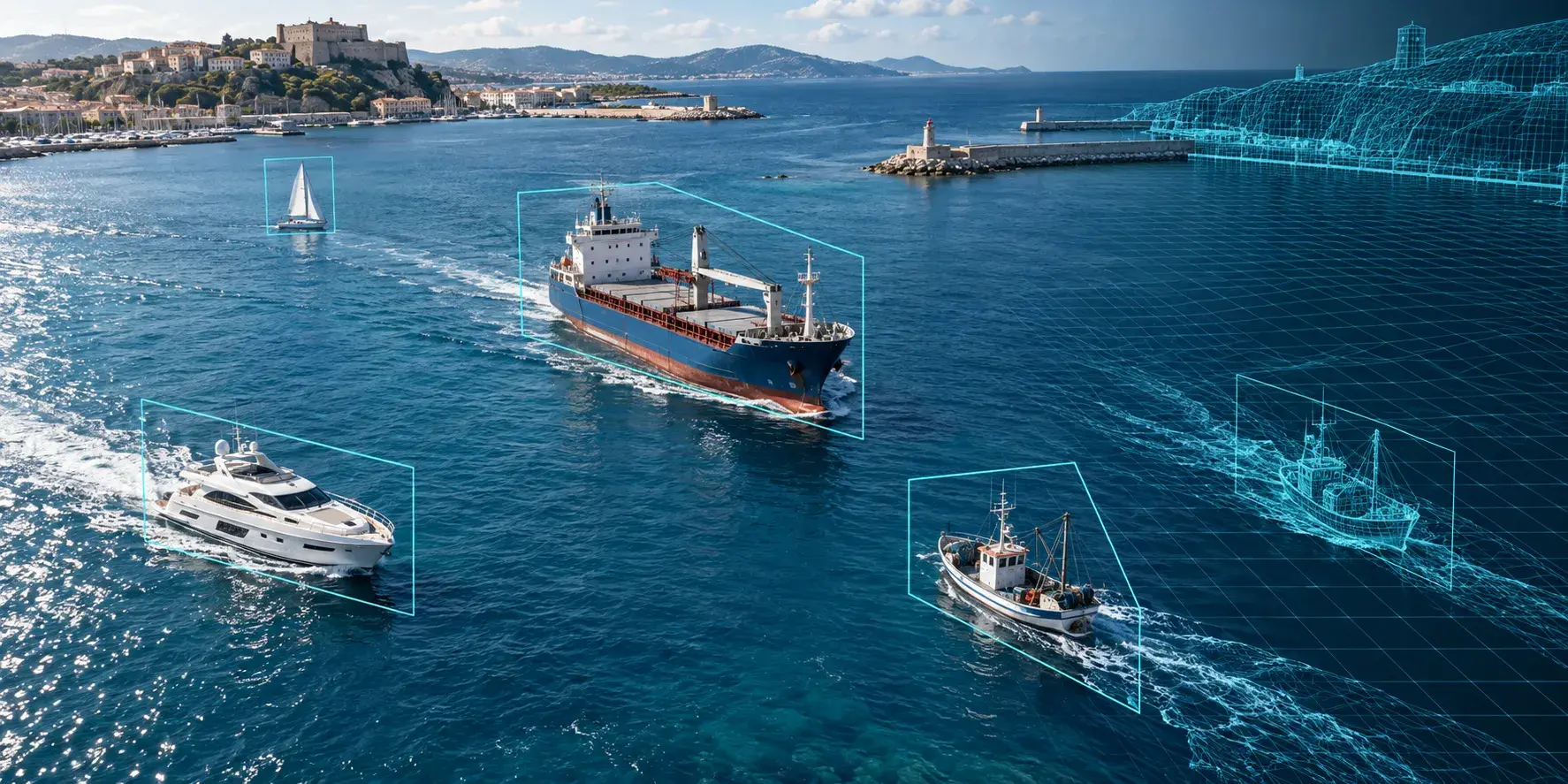
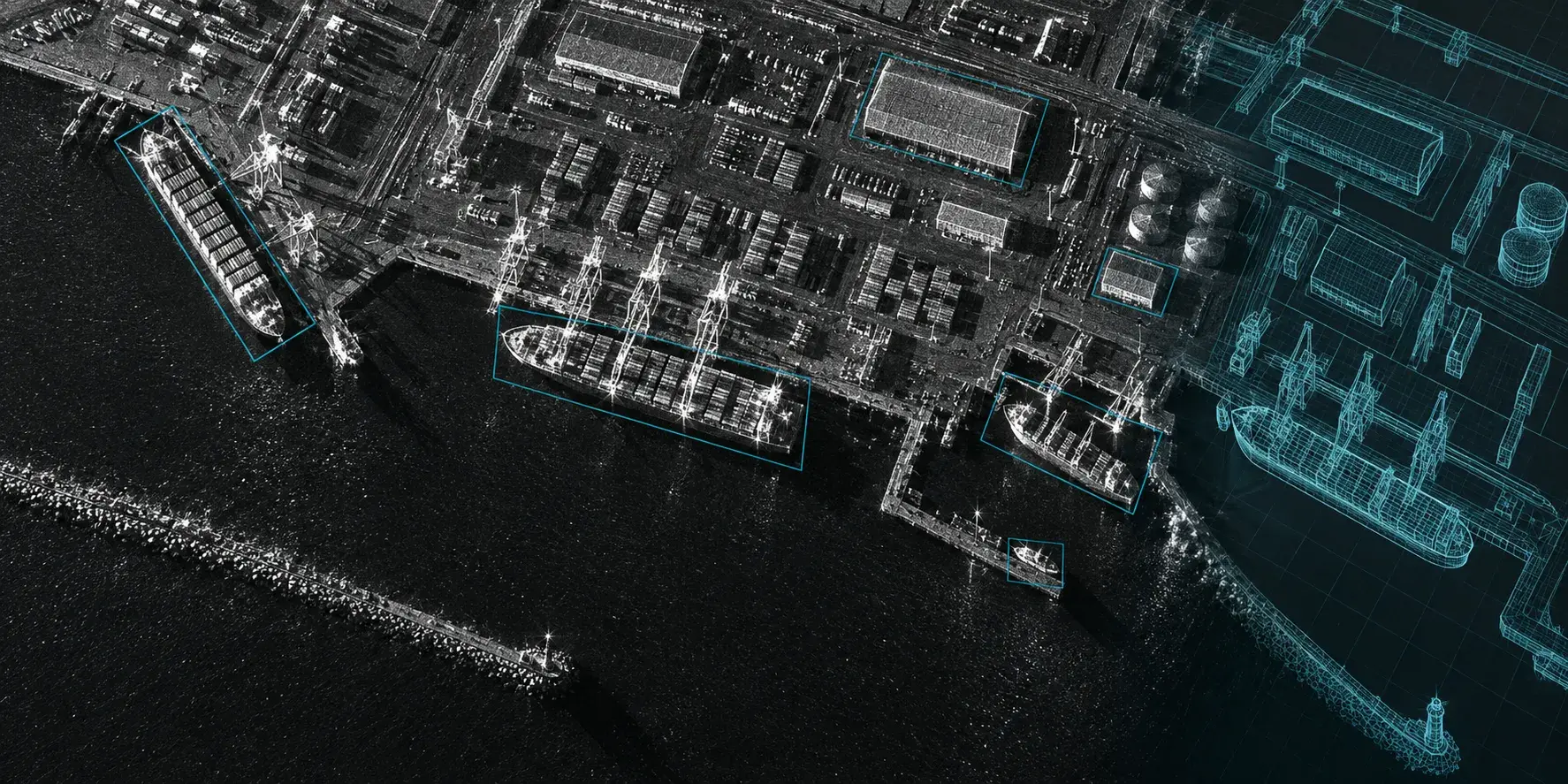
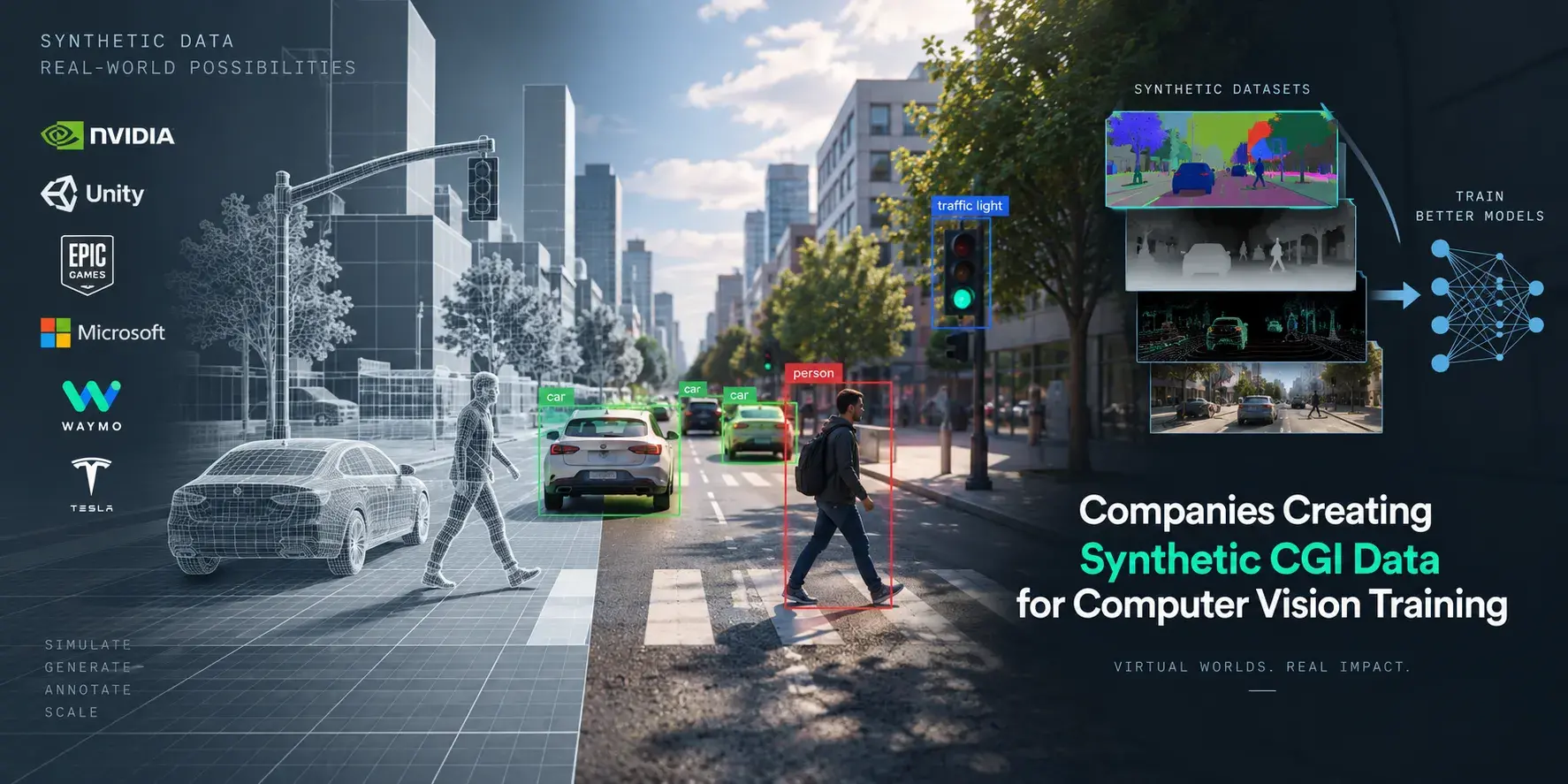
Most synthetic data buyer's guides are written for the tabular side of the market: privacy-preserving customer records, financial test data, healthcare de-identification. None of that maps cleanly onto a team trying to train a detection or classification model on rendered images, radar returns, or lidar point clouds. This is a framework for the computer vision side specifically: what to ask before a demo, which claims deserve skepticism, and how to structure a pilot before committing budget.
Start With the Job, Not the Vendor List
The most common mistake in this process is starting with a shortlist of vendors before writing down what the model actually needs to see. Sensor modality comes first: a pipeline built for RGB cameras will not automatically cover lidar, thermal, or radar, and a vendor's demo reel in one modality says nothing about their capability in another. Scenario coverage comes second: list the specific conditions the model struggles with today, low light, occlusion, a rare object class, a specific viewing angle, before evaluating anyone's ability to generate them.
Volume and iteration speed matter more than most teams initially assume. A vendor that delivers one large, fixed dataset up front suits a stable, well-defined problem. A team still discovering which edge cases actually hurt model performance needs a pipeline that can generate a new batch in days, not a contract renegotiation. Writing this down before the first vendor call keeps the conversation anchored to the actual problem instead of whichever platform has the most polished renders.
A one-page requirements brief, written before any vendor conversation starts, tends to save more time than it costs to write. It should name the sensor or sensors involved, the object classes and scenarios the current model fails on, the rough volume needed to close that gap, and how quickly results need to come back. Vendors respond very differently to a specific brief than to an open-ended "tell us what you can do," and the difference in the quality of the answer is usually the first real signal about whether a vendor understands the problem or is reciting a general pitch.
Questions to Ask Before a Demo
A demo optimized to impress is not the same as a pipeline that will work for a specific use case. A short set of questions, asked before the meeting, filters out vendors that cannot answer them concretely.
- Which sensor types does the platform natively support, and which require a custom integration or a separate contract?
- Can scenario parameters, lighting, weather, occlusion, object placement, be adjusted by the buyer's team, or does every change require a vendor request?
- What does the labeling pipeline guarantee: pixel-perfect ground truth by construction, or a post-generation annotation pass that can introduce error?
- Has the vendor published or shared any result showing a model trained on their synthetic data evaluated against a real-world test set, not just a synthetic holdout?
- Can they connect a buyer with a reference customer in a similar domain, rather than only pointing to logos on a website?
The real-world validation question does more filtering than the other four combined. A vendor with a real answer will usually volunteer it before being asked twice, and a reference customer willing to talk is a stronger signal than any case study a vendor writes about itself.
Red Flags in Vendor Claims
Certain phrases show up across this market that deserve more scrutiny than they usually get. "Physically accurate" and "sensor-perfect" are common in marketing copy but rarely backed by a published methodology, since no simulation fully replicates the physical complexity of a real sensor observing a real, messy world. A vendor using this language without offering to explain what specifically was validated, and against what, is worth pushing on directly.
A second pattern is the synthetic-only benchmark: a result reported entirely against a synthetic validation set, with no real-world comparison anywhere in the material. This tells a buyer how well the model learned the synthetic distribution, not whether that distribution transfers to a real camera or sensor. A vendor confident in their pipeline will usually have at least one real-data comparison to point to, even an early or partial one.
A third, quieter red flag is vagueness about scenario limits. Every synthetic data pipeline has a boundary, a sensor it does not support well, a lighting condition it struggles to render convincingly, a material or texture it approximates poorly. A vendor who cannot name their own pipeline's weak points, when asked directly, either has not stress-tested it themselves or is not willing to say. The U.S. National Institute of Standards and Technology's work on AI risk management makes a similar point in a broader context: documented limitations are part of what makes an evaluation credible, not a weakness to hide.
Running a Pilot Before You Commit
A pilot should be scoped narrowly enough to get a real answer quickly, not broadly enough to become a second full procurement process. Pick one scenario the current model handles poorly, generate a bounded batch of synthetic data against it, retrain, and evaluate against held-out real examples rather than synthetic ones. The validation step is where most synthetic data disappointments actually originate, not in the generation itself, so treat it as the core of the pilot rather than an afterthought at the end.
Set a numeric threshold before the pilot starts, not after seeing the results. An improvement of a few percentage points on a rare-class metric might be exactly what justifies the contract, or it might not clear the bar the team actually needs, but that bar should exist before the data comes back, not get adjusted to match whatever number shows up.
Build vs Buy: When In-House Makes More Sense
Building an in-house rendering pipeline is a real option, not just a fallback for teams that cannot find a vendor. It tends to make sense when a team has ongoing, high-volume synthetic data needs across a stable set of object classes, has 3D content or CAD assets already available from another part of the business, and has engineers capable of maintaining a rendering and domain-randomization pipeline over time. That last condition is the one teams underestimate: a rendering pipeline is not a one-time build, it needs ongoing tuning as sensors change and new object classes get added.
Buying makes more sense for narrower, project-based needs, for sensor types a team has no in-house rendering expertise in, or for getting a working baseline fast while a longer-term in-house capability, if one is planned at all, gets built out. Some teams end up doing both: buying to cover certain sensor types or verticals while building in-house for a core product line where the 3D assets already exist for other purposes. The underlying generation method matters here as much as the vendor decision, since a team with an existing 3D asset library is often closer to a build option than they realize.
Pricing and Contract Models to Expect
Two broad structures dominate this market. Fixed dataset packages charge per delivered batch of images or scenes, priced against volume and scenario complexity, and suit a well-defined, relatively stable requirement. Platform or pipeline access charges for the ability to generate data on demand, usually at a higher upfront cost, and suits a team still iterating on which scenarios and edge cases actually move model performance.
Watch for how a vendor prices scope changes. A contract that treats every new object class or sensor addition as a fresh negotiation will cost more over a year than the sticker price suggests, especially for a team early in defining its full scenario coverage. Asking directly how the pricing model handles scope changes, before signing, avoids a renegotiation surprise six months in.
Support and integration effort rarely show up on the initial quote but show up on the invoice eventually. Getting synthetic data into a training pipeline in the right format, with the right label schema, sometimes needs engineering time on both sides, and a vendor who glosses over that step during the sales process is usually the one who takes longest to resolve it during onboarding. Asking what the first thirty days of implementation actually look like, concretely, surfaces this before it becomes a delay.
Frequently Asked Questions
How long should a synthetic data pilot run before committing to a full contract?
Most pilots that produce a clear answer run four to eight weeks: enough time to generate a bounded batch of data, retrain a model, and evaluate against real held-out data. Longer pilots often signal an under-scoped test rather than a more rigorous one.
Is it cheaper to build an in-house synthetic data pipeline or buy from a vendor?
It depends on volume and how much 3D content already exists in-house. Teams with an existing asset library and ongoing, high-volume needs often find building cheaper over time. Teams with a narrower or one-time need, or no existing 3D assets, usually come out ahead buying.
What accreditations or certifications should a synthetic data vendor have?
For most computer vision use cases, there is no single required certification, but SOC 2 or ISO 27001 for data handling is a reasonable baseline if the training data touches anything sensitive. Beyond compliance, published or shareable validation results matter more than any certificate.
Can one vendor cover multiple sensor types, like RGB, SAR, and lidar?
Some do, but it is rarely equally strong across all of them. A vendor's core strength usually sits in one or two modalities, with others added later or through partnerships, so it is worth asking specifically how long they have supported each sensor type rather than assuming equal maturity.
How do synthetic data vendors typically price their services?
The two most common models are fixed dataset packages priced by volume and scenario complexity, and platform or pipeline access priced for ongoing, on-demand generation. Custom, project-based pricing is also common for narrow or one-off requirements.