Most "synthetic data" roundups lump computer vision in with tabular data, financial records, and clinical notes, as if generating a labeled 3D scene and generating a fake spreadsheet row were the same problem. They are not. Synthetic CGI data, imagery rendered from 3D scenes rather than sampled from a generative model, is its own discipline with its own vendors, its own pipeline, and its own failure modes. This guide covers what CGI-based synthetic data actually is, how it gets made, and which companies build it, including where Vivid 3D fits in that landscape.
What Counts as CGI-Based Synthetic Data
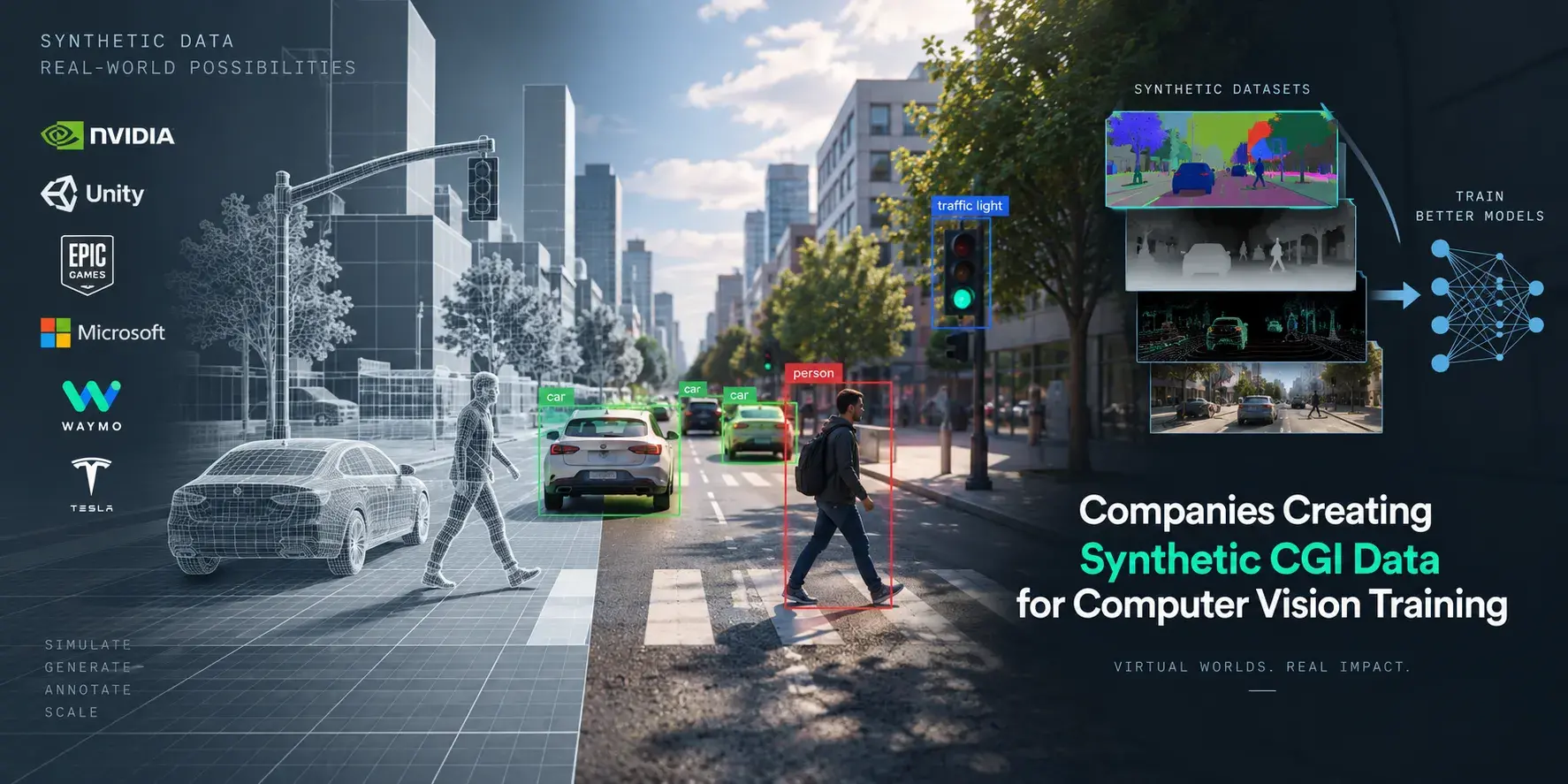
CGI stands for computer-generated imagery, the same term used in film and visual effects. Applied to computer vision training, it means pixels that originate from a 3D scene, a virtual camera, and a render engine, rather than from a camera pointed at the real world or from a generative model sampling a learned distribution. That distinction matters more than it sounds like it should.
GANs and diffusion models learn a distribution from existing images and generate new samples that resemble it. They are fast to iterate with and can produce convincing single frames. But they inherit the biases and gaps of their training data, and they struggle to guarantee pixel-perfect ground truth for depth, segmentation masks, or 6D pose, since nothing in the generation process tracks the underlying geometry. CGI pipelines build the scene first, geometry, materials, lighting, and camera all defined explicitly, then render it. Every pixel traces back to a known 3D point, so the labels come out exact rather than estimated. That is why 3D rendering and simulation are generally the default for spatial, sensor-heavy computer vision tasks, while GANs and diffusion tend to win for texture-level realism or 2D image augmentation where exact geometry is not the point.
Tabular synthetic data, the kind used to stand in for customer records or transaction logs, is a separate category again, generated with statistical models rather than a render engine. None of it overlaps meaningfully with CGI, even though the same vendors and market reports often bundle all three under one "synthetic data" heading.
This confusion shows up constantly in market roundups, where a company generating fake insurance claims sits in the same list as a company rendering 3D warehouse scenes, as if the two solved comparable problems. They don't share a technology stack, a buyer, or an evaluation method. A computer vision team evaluating vendors should filter out anything that cannot produce pixel-level, sensor-matched ground truth, since that is the entire point of choosing CGI over collecting real footage in the first place.
How CGI Synthetic Data Actually Gets Made
3D asset creation and scene assembly
The pipeline starts with 3D assets: scanned or modeled objects, environments, and characters, built to match the geometry and material properties of whatever the model needs to recognize. A robotics dataset needs accurate part geometry and physically plausible materials. A retail dataset needs product-accurate packaging and branding. Scene assembly then places those assets into a composed environment, a warehouse floor, a coastal waterway, a factory line, with lighting and camera rigs that match the target deployment.
Domain randomization and physics simulation
A single rendered scene teaches a model almost nothing. Domain randomization varies lighting, textures, camera angle, weather, occlusion, and object placement across thousands of renders so the model learns the invariant features of the object rather than the quirks of one lighting setup. The technique traces back to a 2017 paper from OpenAI researchers showing that randomizing simulation parameters aggressively enough lets a model trained entirely in simulation transfer to the real world with no additional fine-tuning.1 Physics simulation adds a second layer, making sure objects fall, stack, and collide the way they would on a real factory floor, which matters for anything involving manipulation or motion.
Automatic labeling and sensor simulation
Because the render engine already knows the exact 3D position, material, and identity of everything in the scene, it can output bounding boxes, segmentation masks, depth maps, and keypoints automatically, with zero manual annotation and zero labeling error. Sensor simulation goes a step further, modeling the specific noise, distortion, and spectral response of the camera, lidar, or radar the model will actually run on, so the synthetic training distribution matches the deployed sensor rather than a generic camera model.
Companies Building CGI and Synthetic Visual Data for Computer Vision
The vendor landscape splits roughly by which part of the stack a company owns and which industries it targets. Here is where the more established names sit, alongside Vivid 3D's own position in the space.
Synthesis AI
Synthesis AI focuses on synthetic humans, generating labeled facial and body data for biometrics, AR/VR, and driver monitoring systems. Its platform combines CGI rendering with generative components to produce identity-diverse datasets at a scale that would be impractical to collect with real human subjects, particularly for rare expressions, ages, or demographic combinations.
Vivid 3D
Vivid 3D approaches synthetic data from a different starting point than most of the names above. The platform grew out of 3D configurator and digital asset management work for ecommerce and manufacturing, which means the same 3D asset library, scene tools, and rendering pipeline that power a product configurator also generate training data, as part of a broader visual data platform rather than a standalone dataset product. In practice that shows up as depth in a few specific verticals: synthetic training data for robotics and Physical AI, synthetic SAR imagery for remote sensing teams working with controlled synthetic radar datasets, and synthetic imagery for maritime and vessel detection models. The SAR and maritime work in particular reflects a narrower bet than the generalist platforms above: fewer verticals, but built with the sensor and domain constraints of each one in mind rather than adapted from a general-purpose renderer.
Parallel Domain
Parallel Domain builds synthetic sensor data for autonomous vehicle development, covering camera, lidar, and radar simultaneously so a perception stack can be tested against the same scenario across every sensor type it relies on. Its strength is scenario control: constructing the rare, dangerous edge cases, a child stepping between parked cars, black ice on a curve, that a real-world fleet would need years of driving to encounter naturally.
Rendered.ai
Rendered.ai positions itself around domain-specific pipelines rather than a single vertical, with customers spanning defense, remote sensing, and industrial inspection. Its platform lets teams configure custom simulation graphs for their own sensor and scenario requirements instead of using a fixed content library, which suits customers whose data needs are narrow but technically demanding.
CVEDIA
CVEDIA builds photorealistic, labeled 3D worlds used to train, test, and validate machine learning models before deployment, with a focus on security, surveillance, and edge-device vision systems. Its approach leans on synthetic environments that can be reused across multiple validation scenarios rather than one-off renders.
Sky Engine AI
Sky Engine AI specializes in generating the rare-failure imagery that real-world capture almost never produces, cases where a defect, malfunction, or anomaly needs to appear in training data before a model can learn to recognize it. That focus on the long tail of failure modes is closer to an insurance policy than a general-purpose data source, and it shows in how the company markets itself: less "more data," more "the data you are missing."
NVIDIA Omniverse Replicator
Omniverse Replicator is NVIDIA's general-purpose synthetic data generation toolkit, built on top of its Omniverse simulation platform and used heavily alongside Isaac Sim for robotics. It is less a turnkey vendor and more infrastructure, which makes it a common choice for teams with in-house simulation engineers who want to build a custom pipeline rather than buy a finished dataset.
How to Evaluate a CGI Synthetic Data Vendor
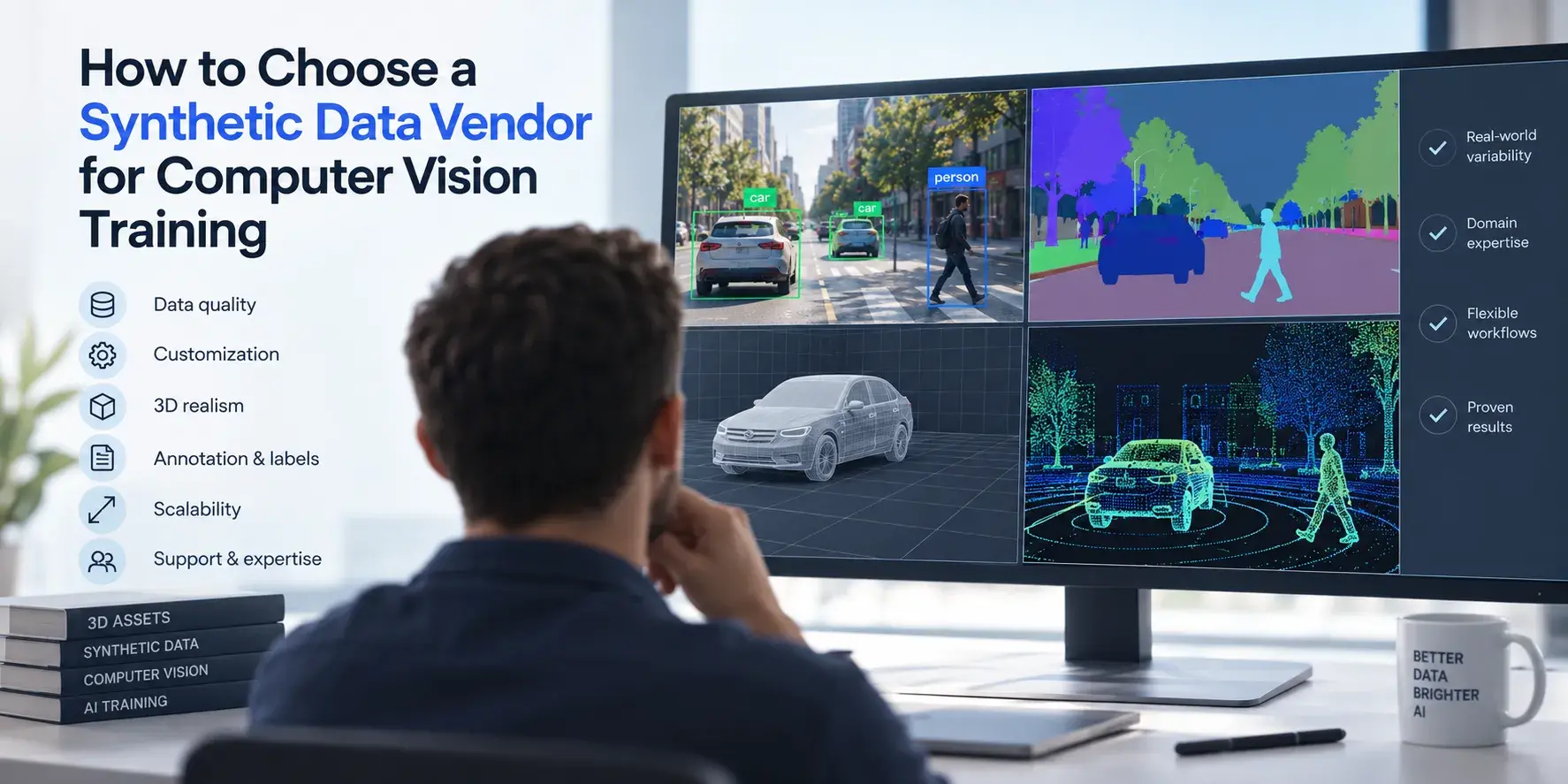
Vendor comparisons in this space tend to focus on render quality screenshots, which is the wrong first filter. A photorealistic still image says little about whether the underlying data will actually improve a model. A few questions matter more:
- Does the vendor support the specific sensor modality the model will run on in production, not just RGB, but the exact lidar, radar, or thermal sensor if that applies?
- Can domain randomization parameters be tuned for the deployment environment, or does the vendor ship a fixed content library that may not match the target scene?
- Is label accuracy verifiable, or does the vendor's pipeline require any manual annotation step that reintroduces human error?
- What does the sim-to-real transfer evidence look like, meaning has the vendor shown models trained on their data performing on real-world test sets, not just synthetic validation sets?
That last point is the one buyers skip most often, and it is the step that determines whether synthetic data actually holds up before a full training run. A vendor with strong renders but no real-world validation evidence is still an unproven bet, no matter how good the demo looks.
Contract structure is worth checking too. Some vendors sell fixed dataset packages, useful when the scenario is well defined and unlikely to change. Others sell access to a simulation pipeline that a team can reconfigure as requirements shift, which costs more upfront but avoids paying for a new dataset every time a model needs to cover a new object class or camera angle. Teams still early in defining their scenario coverage tend to get more value from the second model, even at a higher initial price.
Where CGI Synthetic Data Fits by Industry
Robotics and Physical AI teams use CGI synthetic data to cover manipulation, navigation, and object recognition tasks where the physical world is expensive or slow to instrument for data collection. A warehouse robot needs to recognize thousands of SKUs under variable lighting, something no real-world capture schedule could feasibly cover.
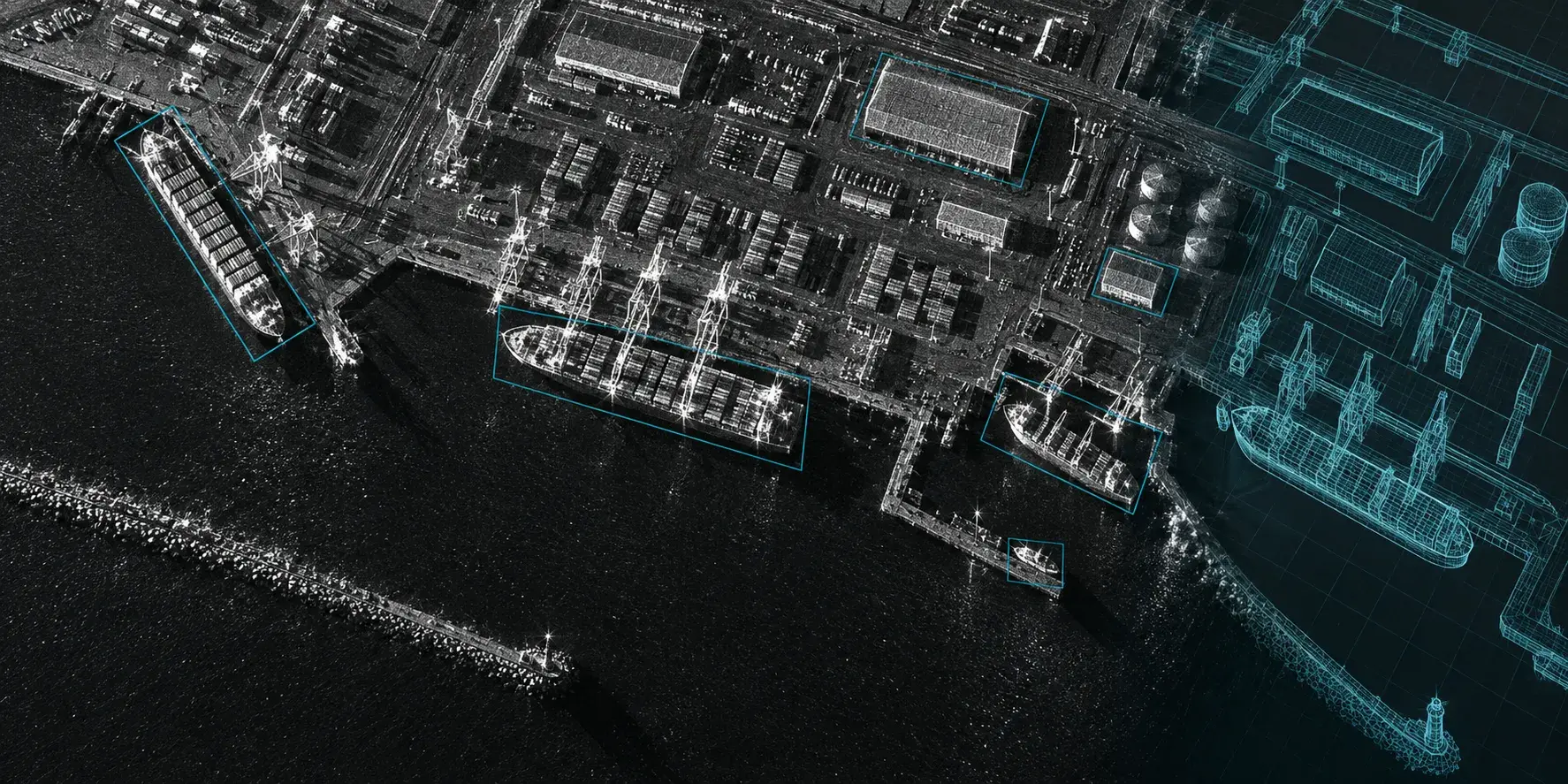
Remote sensing and SAR teams face a different constraint: real synthetic aperture radar collection requires satellite or aircraft time, and target scenarios, specific vessel types, specific terrain, are often rare or classified. Synthetic SAR imagery fills that gap without claiming to replicate physical sensor behavior exactly, which is why the more careful vendors in this space describe their output as controlled synthetic radar datasets rather than physically accurate simulation.
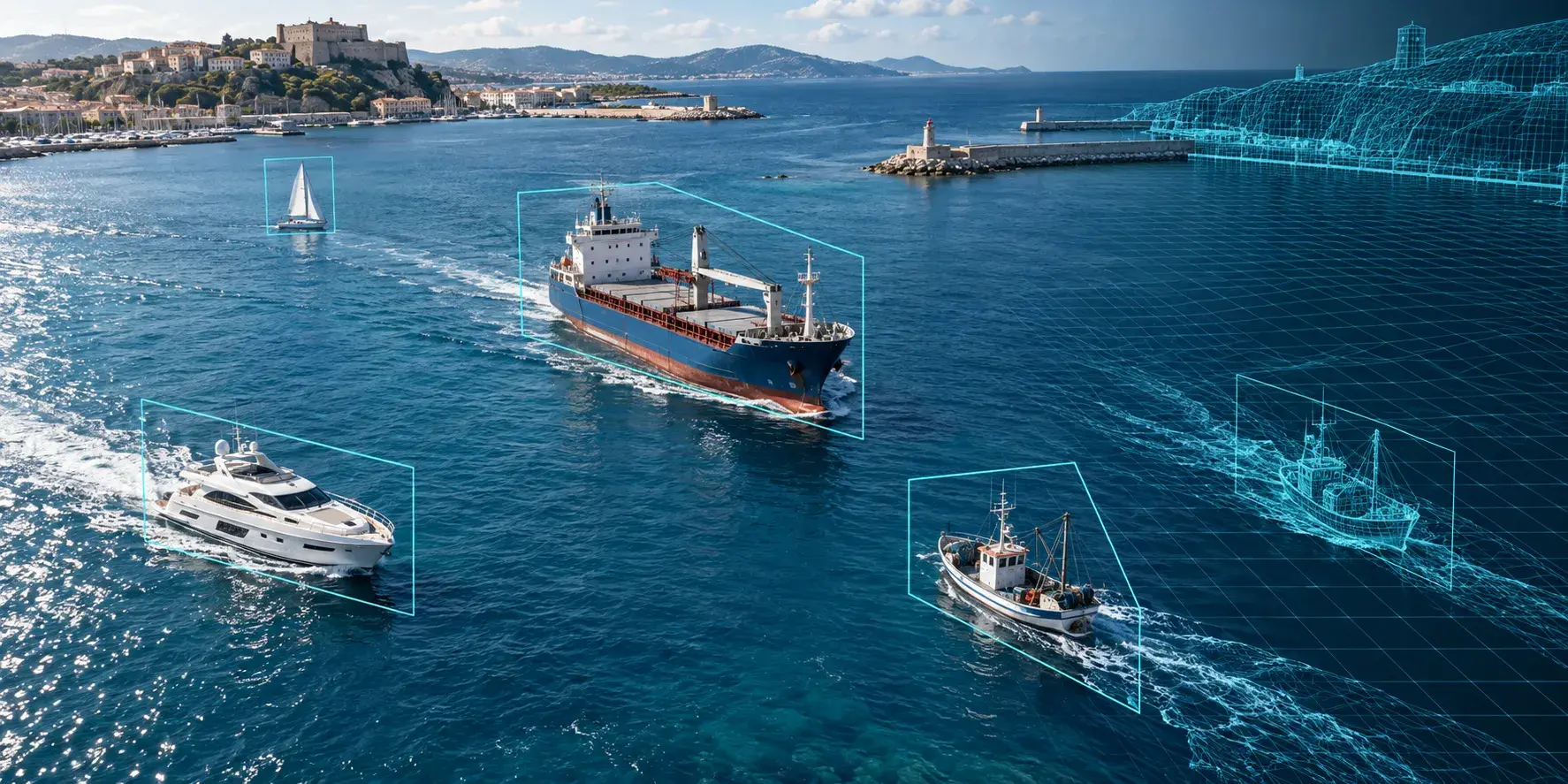
Maritime and vessel detection models run into a related problem: the range of vessel types, weather conditions, and viewing angles a detection model needs to handle vastly exceeds what any single port or coastline's real footage can provide. CGI-rendered vessel scenes, varied systematically across hull type, sea state, and camera angle, extend that coverage without months of additional data collection.
Industrial inspection sits closer to the original use case for CGI in manufacturing: rendering defect variations, from scratches to misalignments to missing components, at a density that a real production line would take years to produce naturally, since most parts coming off a line are not defective.
Ecommerce and retail applications are less often discussed alongside these but follow the same logic. A product recognition or visual search model needs consistent, labeled imagery across an entire catalog, shot from angles and lighting conditions no photo studio schedule covers at scale. Vendors with a 3D asset library built for product visualization, rather than one built from scratch for a single CV project, tend to generate this kind of catalog-wide training data faster, since the same models used for marketing renders double as the source geometry for training data.
Frequently Asked Questions
What is CGI-based synthetic data, and how is it different from GAN-generated data?
CGI-based synthetic data is rendered from an explicit 3D scene, with known geometry, materials, and camera parameters, so every pixel maps back to exact ground truth. GAN and diffusion models instead sample from a learned distribution of existing images, which can look realistic but does not carry the same guaranteed geometric accuracy for depth, pose, or segmentation labels.
Is CGI synthetic data as good as real data for training computer vision models?
It depends on the task and how the data was validated. CGI synthetic data tends to outperform real data for rare edge cases and perfect labeling, but a domain gap between rendered and real imagery can still hurt performance if the pipeline was not tuned for the target sensor and environment. Most production pipelines mix synthetic and real data rather than replacing one with the other entirely.
Which industries rely most on CGI synthetic data today?
Autonomous vehicles, robotics and Physical AI, defense and remote sensing, and industrial inspection are the heaviest users, largely because each faces either a data scarcity problem, a safety constraint that makes real-world collection risky, or a labeling cost that CGI's automatic ground truth eliminates.
How much does CGI synthetic data cost compared to collecting and labeling real data?
Costs vary widely by vendor and scene complexity, but the main savings usually come from eliminating manual annotation rather than the rendering itself. A dataset that would take months of real-world capture and labeling can often be generated and perfectly labeled in days once the 3D assets and scene pipeline exist.
Can synthetic and real data be mixed in the same training set?
Yes, and in practice this is the more common approach than using either data source alone. Hybrid training, using synthetic data to cover volume and edge cases while real data anchors the model to true sensor characteristics, tends to generalize better than a purely synthetic or purely real dataset.