How synthetic data improved object detection on real car photos by 4.45 pp
How synthetic data improved object detection on real car photos by 4.45 pp
Case Studies & Outcomes
5 min read
Technical blogger
Diego Santos
Updated:
October 28, 2026
Posted:
October 28, 2026
Fine-tuning a COCO-pretrained model on 1,600 Vivid 3D synthetic renders improved detection AP50:95 by 4.45 percentage points and mean bounding-box overlap by 1.52 percentage points in a targeted real-photo test.
Result
Change
Before → after
Detection AP50:95
+4.45 pp
80.42% → 84.87%
Mean box overlap (IoU)
+1.52 pp
90.76% → 92.28%
Synthetic images for fine-tuning
1,600
no real images added
Test scope: 34 real photos, 43 annotated cars, the same test for both models.
Trained on: synthetic car renders.
Tested on: real car photos.
Read the result correctly: this is a targeted car-detection benchmark, not a claim of better detection across all cars or environments.
Object detection found the cars. Could synthetic data place better boxes?
A COCO-pretrained detector already had general knowledge of cars. This experiment tested whether synthetic images from an existing 3D asset could improve the localization of cars in real photographs without adding real images during the additional fine-tuning stage.
The research question: can synthetic data improve vehicle localization in real photographs? The focus was box placement, not vehicle-make recognition, model classification or higher detection recall.
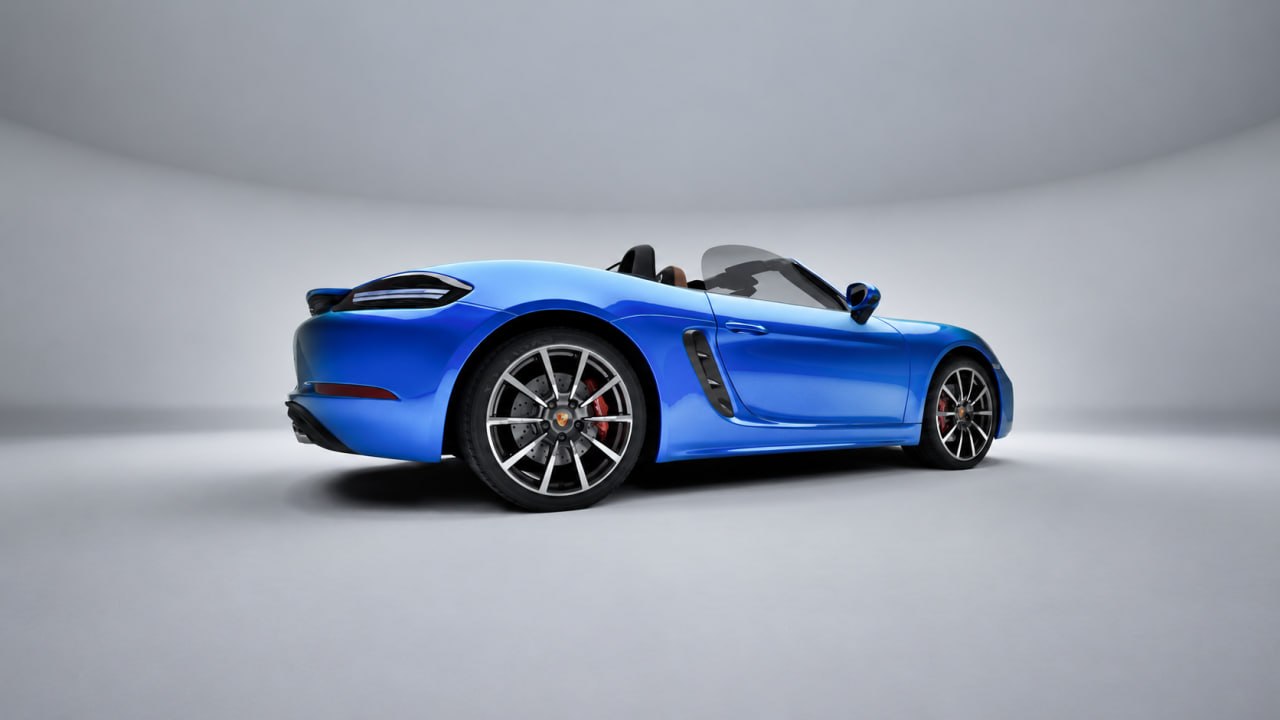
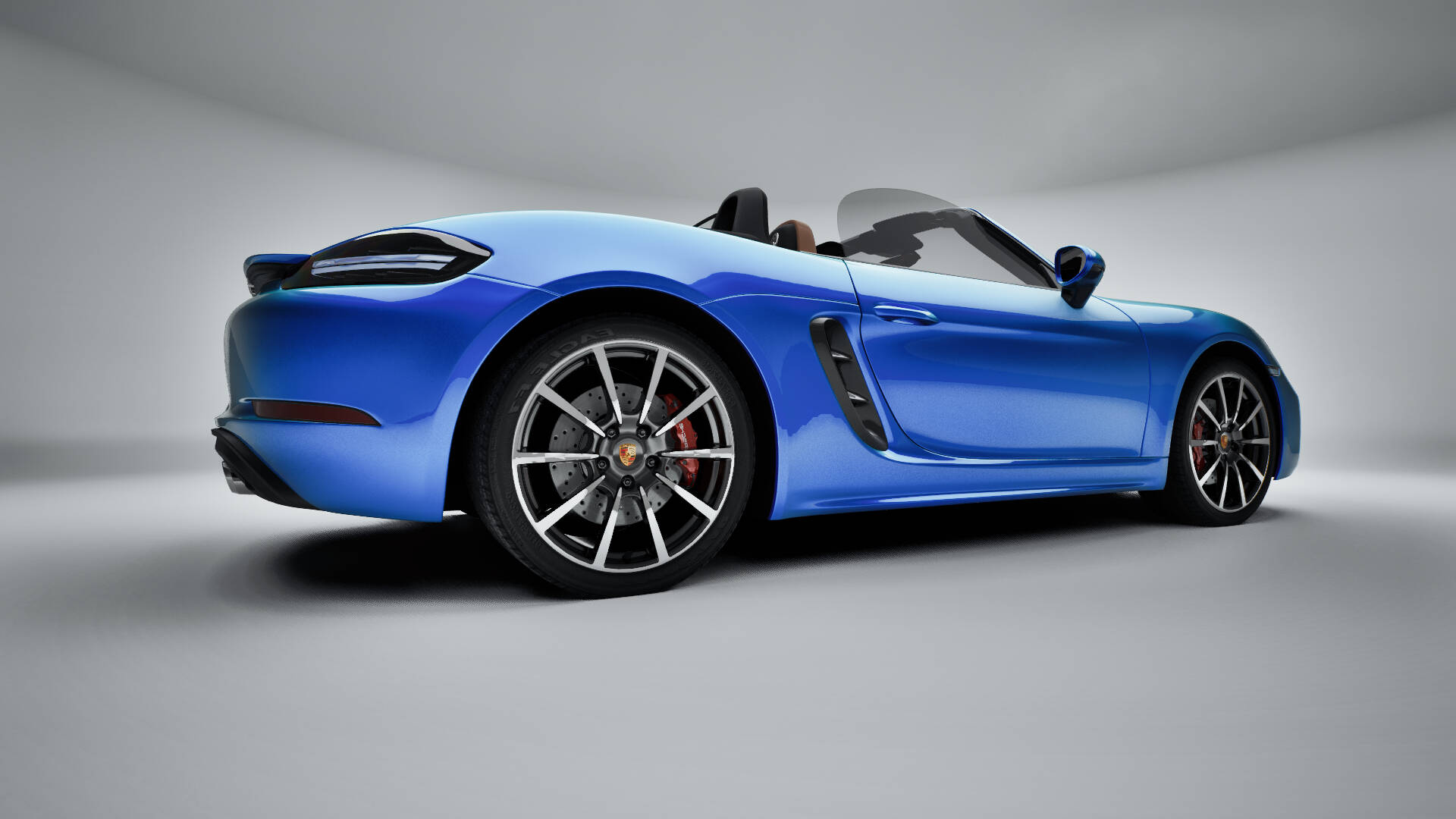
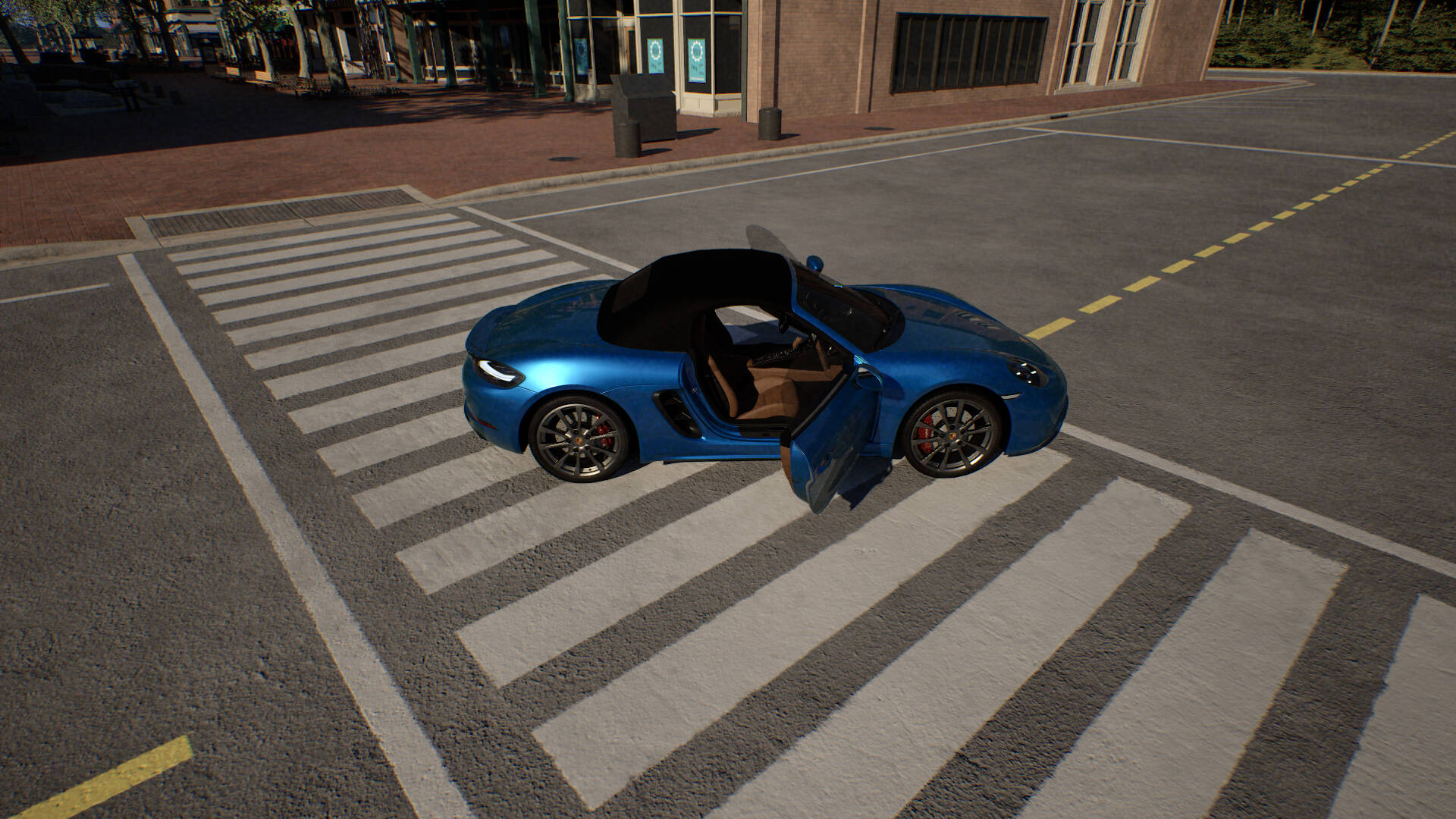
One existing 3D asset, three real training examples
White: studio environment.
Downtown: urban road environment.
Shrubland: open-road environment.
Each image was paired with a corresponding object annotation in Vivid 3D's synthetic training dataset. Scenes and camera viewpoints vary across the training set.
A controlled comparison: original model vs. synthetic data fine-tuning
The comparison kept the real-photo evaluation set fixed and measured changes after synthetic-only fine-tuning of the pretrained detector.
Start with the model: Faster R-CNN ResNet-50 FPN v2 with COCO-pretrained weights.
Fine-tune: 1,600 synthetic car renders, synthetic images only.
Validate: 400 extra synthetic renders from separate scenes.
Evaluate: 34 real sports-car photos with 43 annotated cars.
Technical setup
Parameter
Value
Detector
Faster R-CNN with ResNet-50 FPN v2; initial weights pretrained on COCO
Training
1,600 synthetic RGB renders of a convertible sports car, with bounding-box annotations
Validation
400 additional synthetic images from separate scenes; checkpoint selection
Real-photo test
34 real sports-car photos; 43 annotated cars, including background vehicles
Selected checkpoint
Synthetic-only SGD, epoch 26; chosen using synthetic validation AP50:95
Matched evaluation
Same 34 real photos and same 42 detected cars in the before/after comparison
Important distinction: no real photos were added in the fine-tuning stage. The starting model was already COCO-pretrained, so this was not training a detector from scratch without real data.
Synthetic data fine-tuning improved detection on real car photos
Both models detected the same 42 of 43 annotated cars. The measured gains came from better localization and detection quality across overlap thresholds, not from finding more cars.
Metric
Before
After
Change
Mean bounding-box IoU
90.76%
92.28%
+1.52 pp
Detection AP50:95
80.42%
84.87%
+4.45 pp
False detections (conf. 0.50)
12
10
2 fewer
pp = percentage points. IoU is intersection over union (100% indicates a perfect match). False detections are counted at confidence threshold 0.50.
Bars reproduce the supplied before/after values. The selected model was the synthetic-only checkpoint from epoch 26.
Before and after synthetic data fine-tuning on the same real photo
In this single illustrative example (Photo 5), the predicted bounding box moved closer to the reference annotation. The crop and scale are identical in both panels.
Blue: reference annotation. Green: model prediction. Box overlap 87.88% before, 92.09% after. Photo 5 is one example, not an average.
Where synthetic fine-tuning did not generalize to all cars
COCO car AP50:95: 49.91% → 46.49% (−3.42 percentage points).
The broader COCO car benchmark became worse after fine-tuning. These findings support task-specific adaptation, not general improvement across cars, cameras, environments or deployment conditions.
This small test provides descriptive evidence only. Statistical significance and production-wide performance were not established.
Synthetic data for object detection: what this means for CV teams
How much synthetic data do you need to fine-tune an object detector?
It depends on the task and how far it is from what the model already knows. In this test, 1,600 renders of one 3D asset, plus 400 for validation, improved AP50:95 on real photos by 4.45 pp.
Can a model fine-tuned on synthetic data work on real images?
For a targeted task, yes. Here a detector fine-tuned only on synthetic renders improved on real car photos, while general COCO car detection declined by 3.42 pp.
Were real photographs used for training?
Not in the additional fine-tuning stage. The original detector had already been pretrained on COCO.
Does this prove better car detection overall?
No. The targeted real-photo benchmark improved while broader COCO car AP50:95 declined.
Method and sources
Real-photo test: 34 reviewed photographs with 43 annotated cars; Photo 41 excluded from both runs because of an incorrect annotation. The same set was used in earlier comparisons. Selected checkpoint: synthetic-only SGD, epoch 26. Reported gains are descriptive, not a statistical-significance claim.
Real-photo dataset: car-image dataset by tink, via Roboflow Universe (CC BY 4.0). Source photo cropped and annotated for comparison. This independent benchmark does not establish involvement or endorsement by any vehicle manufacturer.