NVIDIA Inception Program member

Computer Vision Development Services

Custom computer vision development, from data preparation and model training to evaluation and delivery.
Vivid 3D provides computer vision development services for businesses that need a model built, trained and evaluated for a specific task. Our team connects real and synthetic data, model training, error analysis and agreed deployment requirements. Start with a new recognition task or improve an existing model, then receive the trained model or API access defined in your project scope.
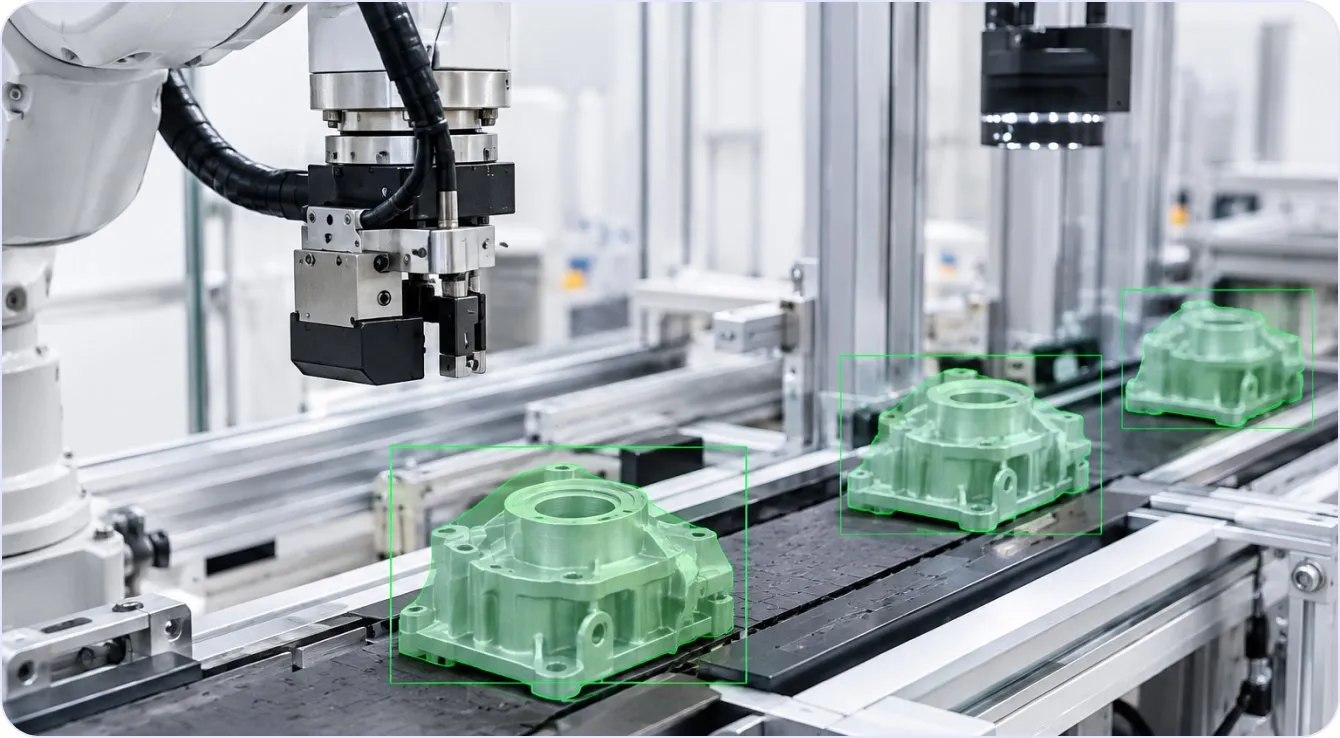
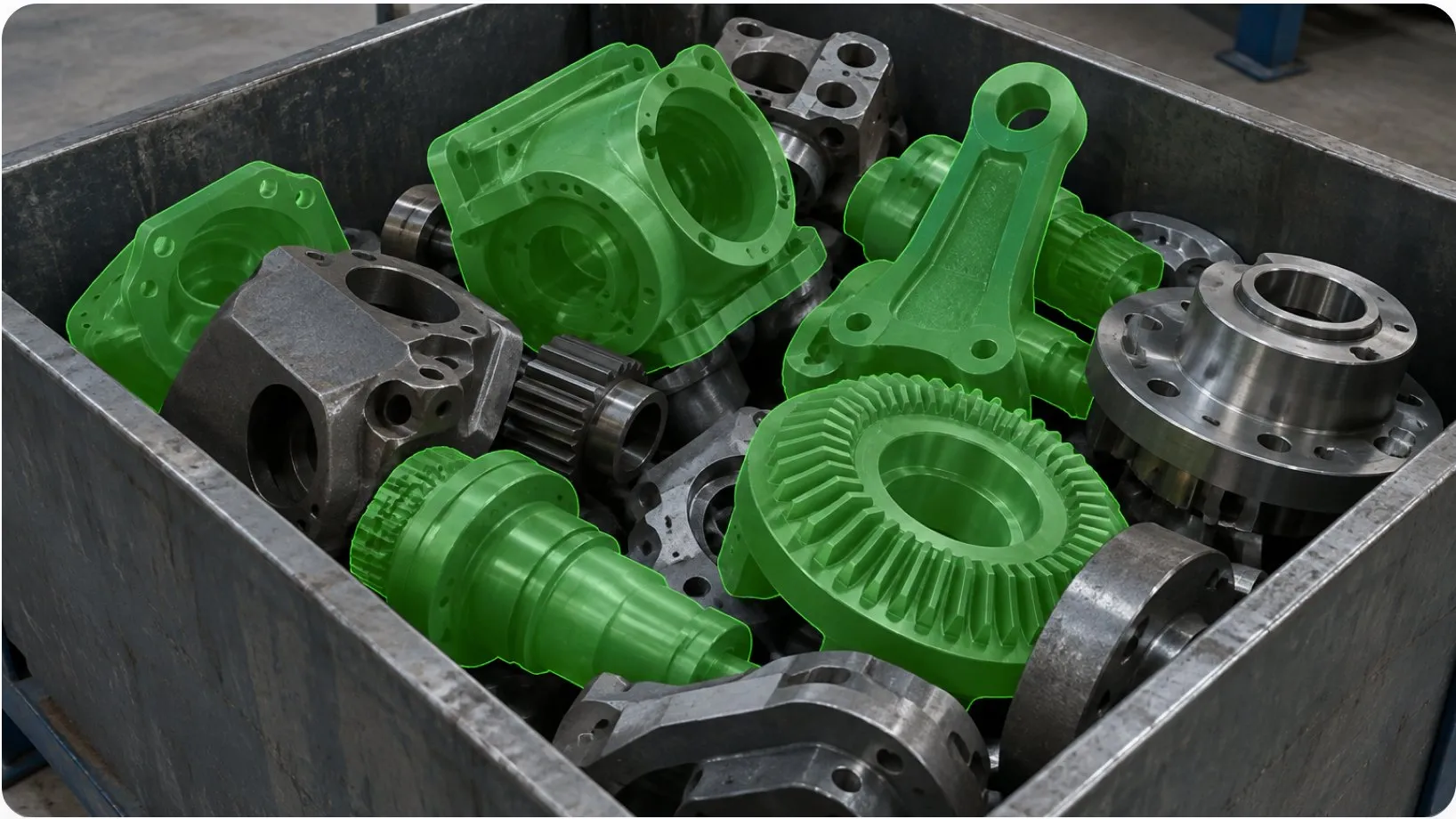
Robotic arm on a production line with detected parts highlighted in green

Custom Computer Vision Development for Your Application

Build an object detection or segmentation model around the parts, products, defects and environments your application needs to recognize. We review available images and reference materials, define the required outputs and agree how the model will be evaluated before development begins.

If you already have a model, start with the conditions where it struggles: different lighting, occluded objects or a new environment. Evaluation on data kept separate from training reveals gaps and guides the next development iteration. Successful testing reduces uncertainty, but does not guarantee performance in every production situation.
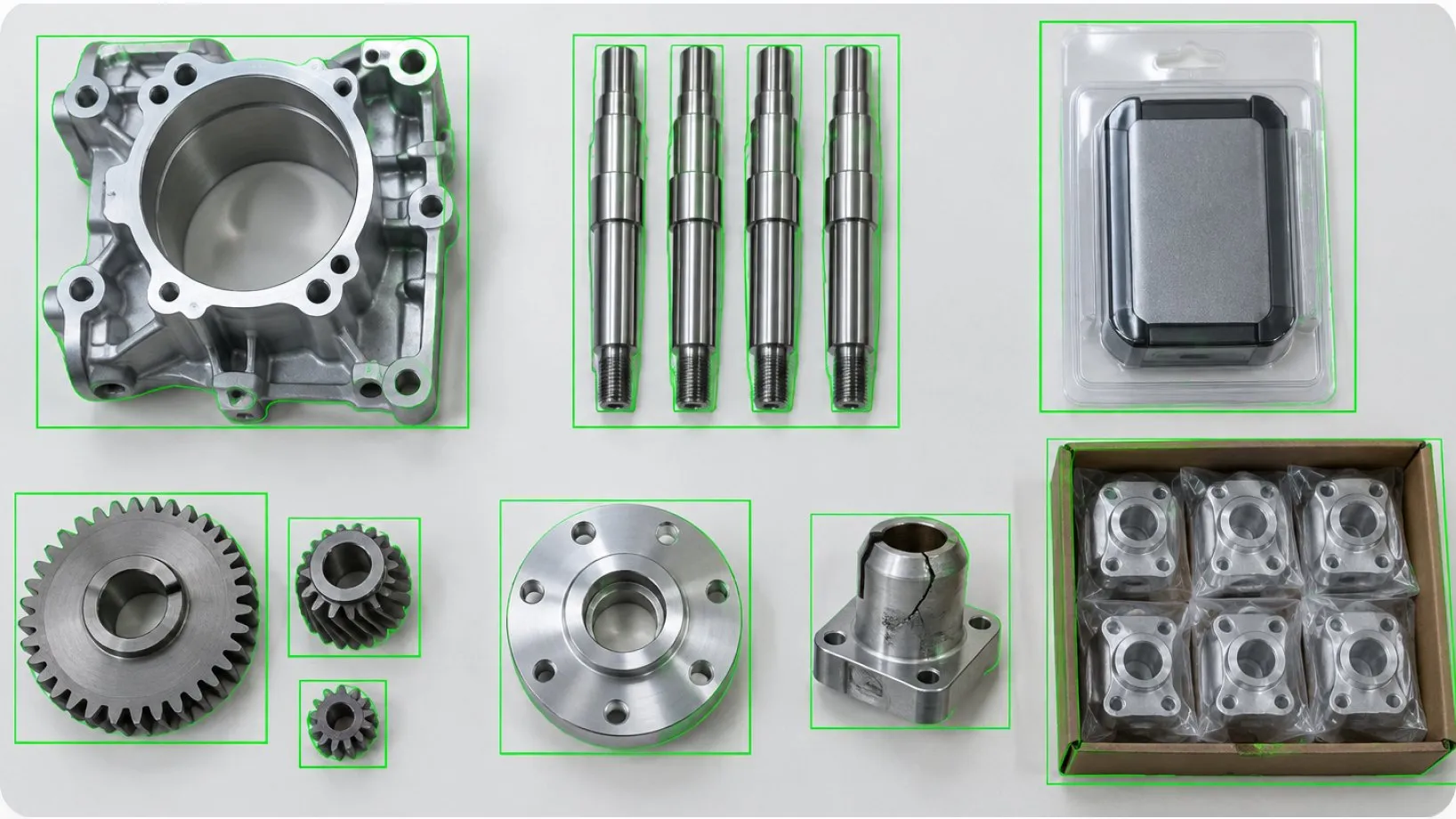
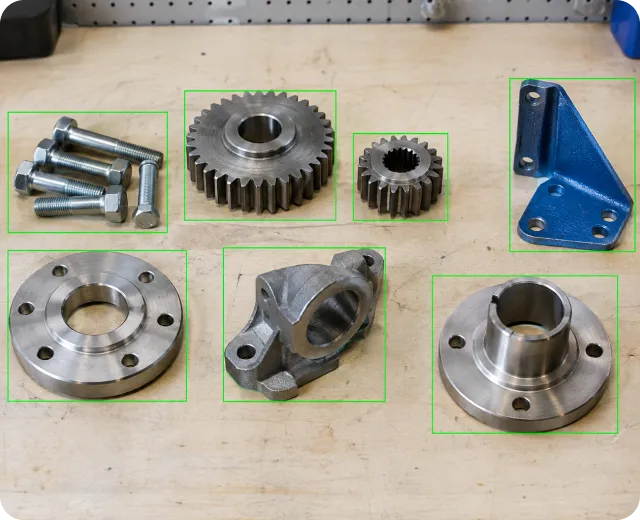
Industrial parts with object detection bounding boxes

Computer Vision Applications

Manufacturing Quality
Inspection
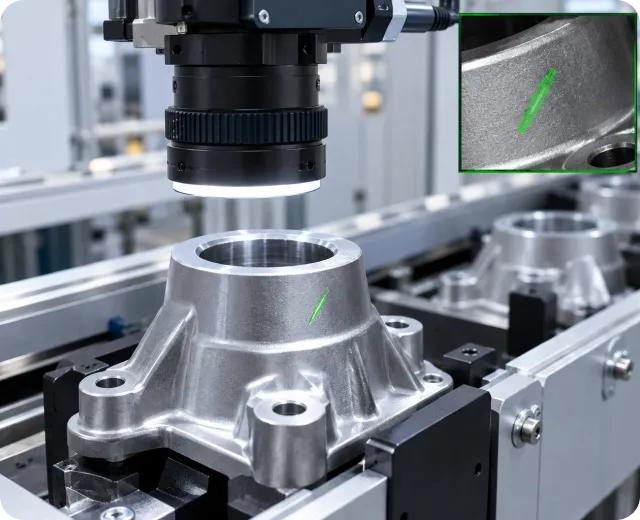
Develop detection and segmentation models for components and visible defects. Define the defects and inspection conditions with your team, and use real examples to check whether synthetic scenarios represent the task.
Computer vision inspection of a machined component on a production line
Robotic Object
Detection
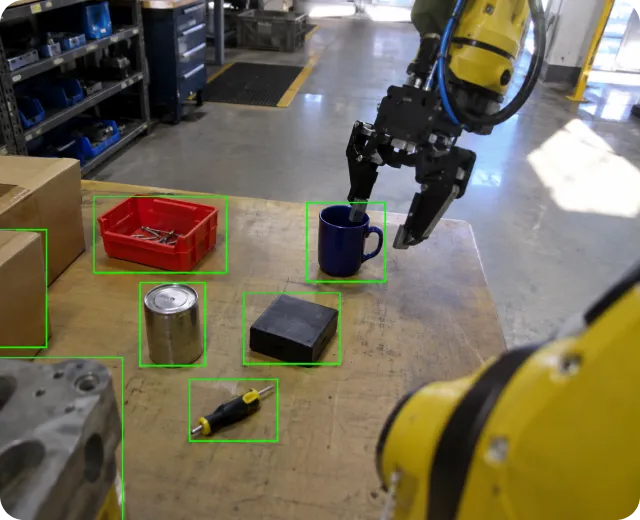
Train and evaluate object recognition in robotic workspaces, including changes in viewpoint, lighting and partial occlusion.
Robotic arm workspace with detected objects highlighted
Industrial Part
Recognition
Use product and component references to prepare training examples for identifying parts. Assess performance on photographs representative of the intended application.
Industrial parts recognized with bounding boxes
Warehouse
Automation
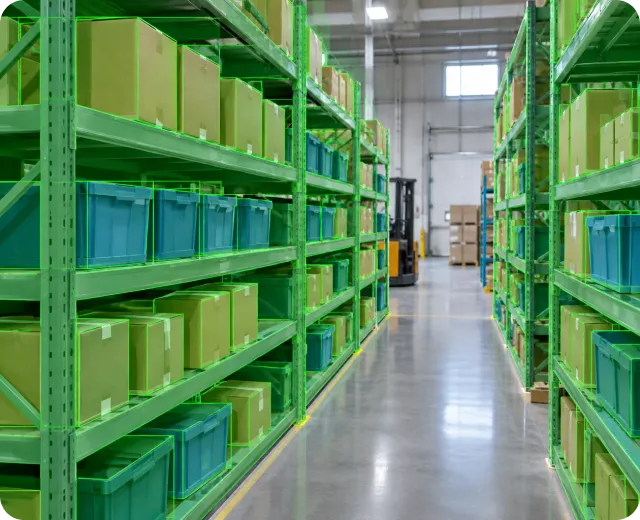
Prepare detection and segmentation data for objects such as boxes, bins and shelving, with scenarios defined around the operating environment.
Warehouse shelving with bins segmented for detection

Computer Vision Consulting Services

Define the recognition task, review data readiness and choose a practical development scope before commissioning 
a model. Our computer vision consulting services help align the model outputs, evaluation criteria and intended 
delivery environment with your business requirements.
A Defined Project or Support for Your Team
If you are choosing a computer vision development company, start by agreeing what it will deliver and who will handle each stage. Vivid 3D can carry out the agreed data preparation, model training and evaluation work, or support a specific stage alongside your internal AI team.
Talk to Vivid 3D
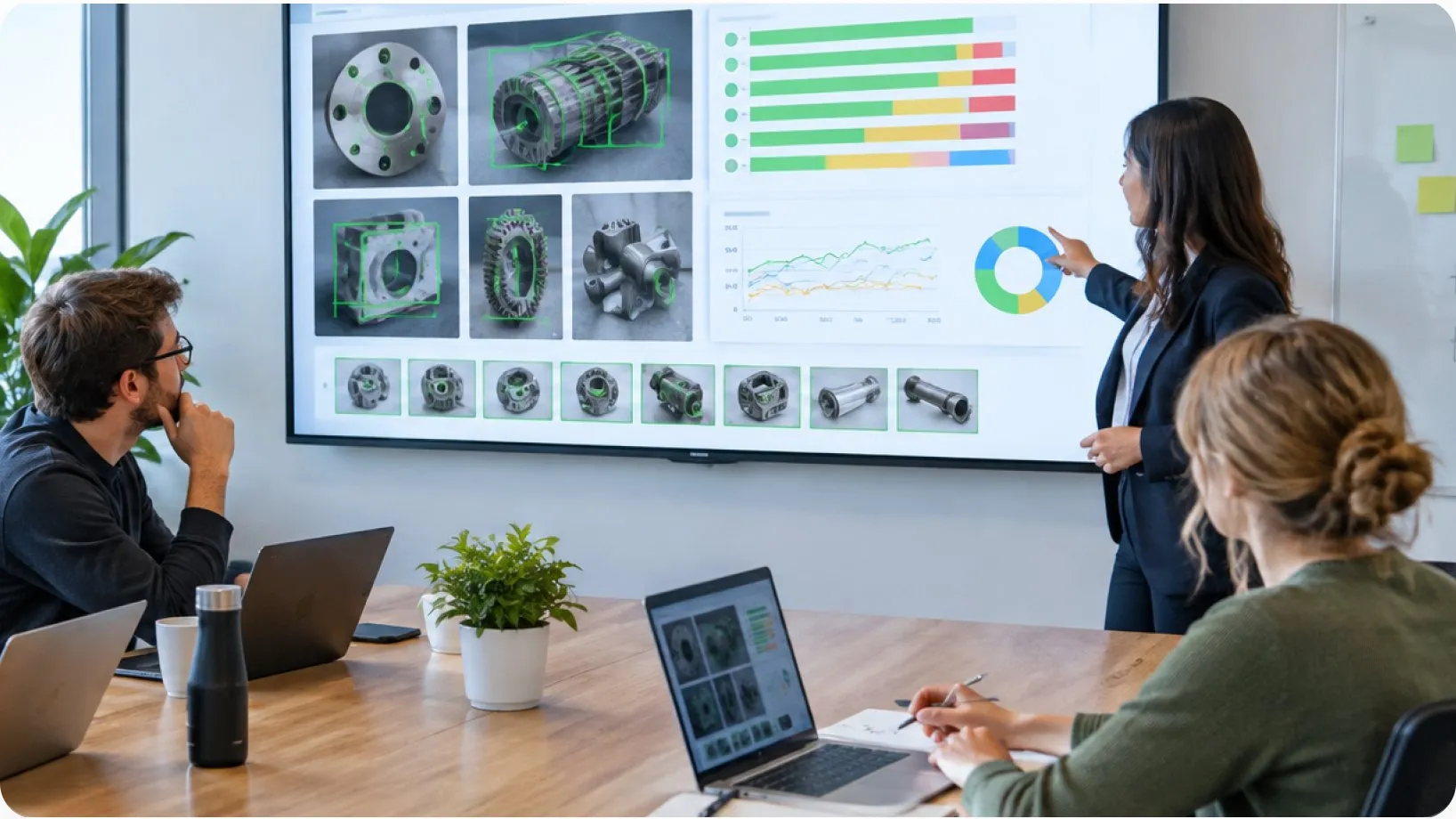
Team reviewing computer vision results on a large screen

Our Computer Vision Development Services

Model Development, Training and Fine-Tuning
Develop and train a model for your object detection or segmentation task, or fine-tune an existing model. We agree the recognition requirements, data, model approach, target conditions and evaluation criteria before work begins.
Evaluation and Error Analysis
Assess performance on data separate from training and review examples where predictions fail. The AI team agrees the measurements and reporting detail for the task, rather than applying one fixed report to every model.
Real and Synthetic Data Comparison
Where included in the project, compare real-only, synthetic-only and combined training data to answer a practical question: does adding synthetic data help this application?
Use a common independent test set and agree comparable model architectures, training settings and compute budgets. Document differences and limitations so the results can be interpreted fairly.
Targeted Synthetic Data
Prepare additional examples for agreed gaps, such as difficult lighting, partial occlusion or underrepresented objects. Supported data includes RGB, depth and LiDAR, with detection and segmentation annotations according to project scope.
Model Delivery and Deployment Planning
Receive the trained model for your environment or access it through an API. We agree the intended runtime, required inputs and outputs, and integration responsibilities as part of the project. Delivery can support your existing application or workflow, with deployment work defined in the scope.

Find the Gap. Generate Better Data. Test Again.

Evaluate
Find Gaps
Generate Data
Retrain
Validate
Evaluation alone tells you where a model struggles. Vivid 3D can also help prepare the missing training examples and support the next training iteration.
Our 3D team manually prepares polygonal assets, with production and approvals managed through Vivid Manage. Finished models are used in Unreal Engine simulations to build controlled visual scenarios and synthetic datasets.

Dataset storage and versioning support reuse across iterations. Dataset delivery can use COCO, KITTI, YOLO or a format agreed with your team. API-based dataset delivery can be implemented on request.
Keep final test data separate from training and tuning. Use development data to investigate failures, then check improvements against an independent evaluation protocol to reduce the risk of overfitting to known test examples.
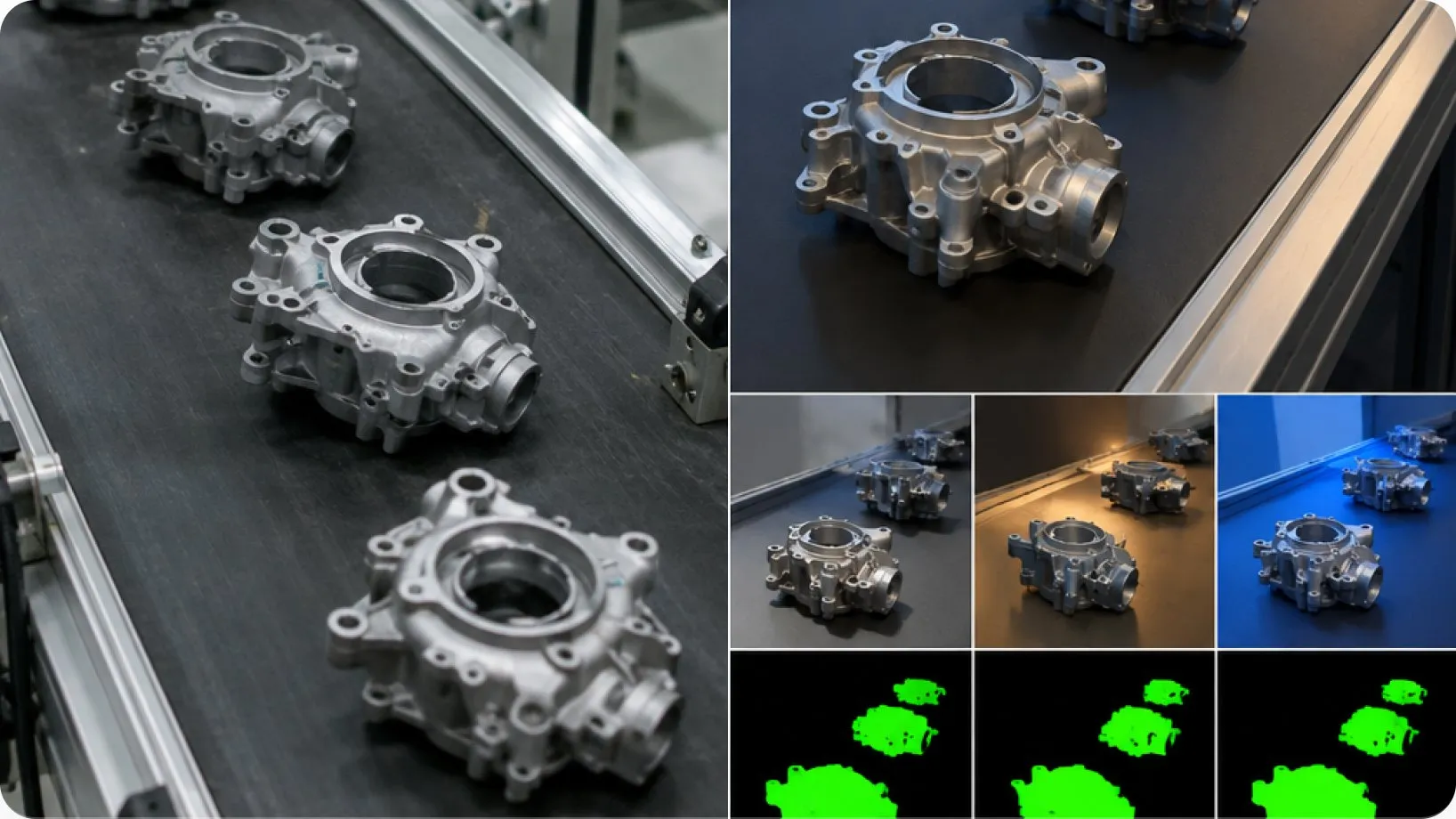
Industrial parts on a conveyor next to synthetic variations and segmentation masks
Partly hidden industrial parts in a bin with segmentation highlights
Illustrative Workflow: Occluded Industrial Parts
A part-recognition model struggles when objects are partly hidden. The team reviews representative errors and prepares additional synthetic scenes with relevant occlusion. After fine-tuning, the model is evaluated on independent real images under the agreed protocol.
The comparison helps determine whether the new data improved the target scenario and whether performance changed elsewhere. This is an illustrative process, not a published customer case study or a claim of measured improvement.

How It Works

Step 1  Define the Task
Review your business task, available data, existing model if any, operating conditions and success criteria. Define the required model outputs, intended delivery environment, pilot and deliverables.
Task definition form illustration
Step 2  Define the Model and Baseline
Review the available training data and choose an approach for the task. Evaluate an existing model or establish an initial baseline, then agree the training and comparison setup.
Model baseline setup illustration
Step 3  Prepare the Training Data
Review the available data, difficult conditions and representative errors. Prepare the agreed real and synthetic training examples, keeping evaluation data separate from training and tuning.
Training data preparation illustration
Step 4  Develop, Train and Iterate
Develop and train the model or fine-tune your existing one. Review errors, prepare additional scenarios where required and repeat the agreed training and evaluation cycle.
Training iteration pipeline illustration
Step 5  Validate and Deliver
Evaluate the model under the agreed protocol, document the results and limitations, and deliver the commissioned model or API access. Complete the deployment and integration work included in the project scope.
Validation and model delivery illustration
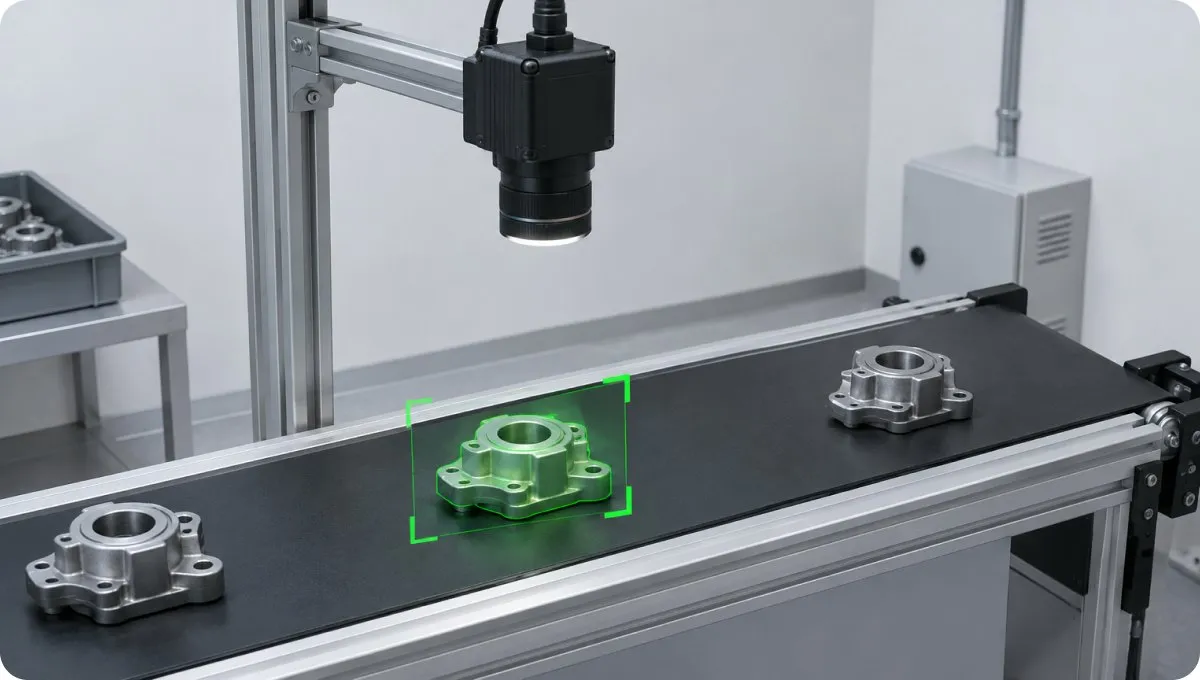
Camera inspecting a part on a conveyor with a green detection box

Start with a Focused Pilot

Begin with one task, an existing model or a defined training objective, and representative data. Agree the evaluation conditions and deliverables before expanding the work.
Discuss Your CV Project

What You Receive

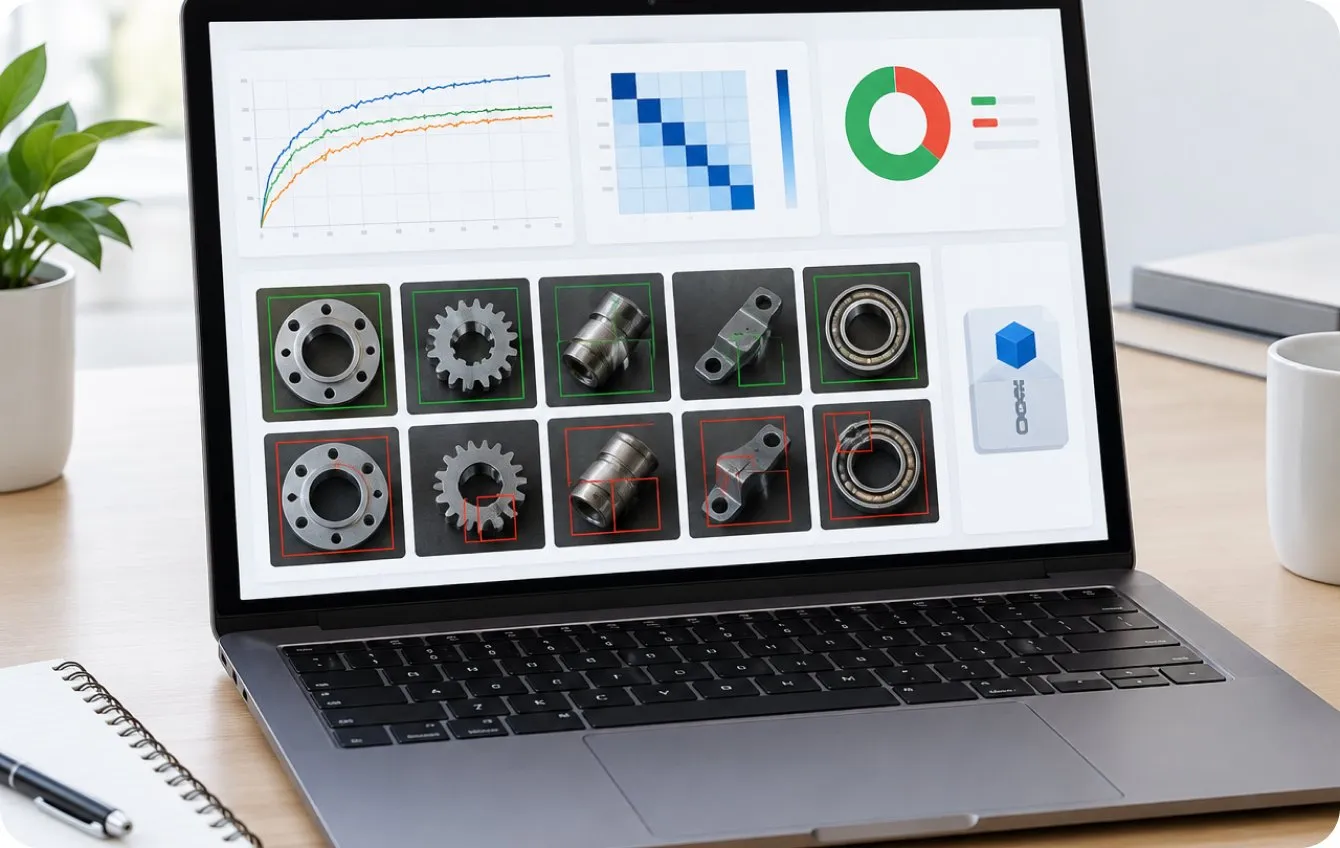
Laptop showing model evaluation charts and recognized industrial parts
The pilot scope defines the delivery package: a performance summary against agreed criteria, representative errors and limitations, and recommendations for additional data or further training.
Where commissioned, it also includes the comparison of real and synthetic training approaches, a targeted dataset, the trained or fine-tuned model, and follow-up evaluation results. Specific report measurements are agreed with the AI team.
Timing and cost depend on data readiness, model complexity, required scenarios and the number of training iterations. Share your task and available materials to define an appropriate starting scope.

FAQ

Can you develop a new model or improve an existing one?

Yes. Our custom computer vision development service covers new detection and segmentation models as well as fine-tuning and evaluation of existing models. The approach depends on your task, available data and intended environment.

What does model evaluation include?

The AI team agrees the evaluation criteria, test data and reporting scope for your application. Results should explain performance under the tested conditions, relevant errors and the limitations of the evaluation.

How do you compare real and synthetic data?

When this comparison is part of the scope, evaluate the agreed training approaches against a common independent test set. Align the model and training conditions where practical and document differences that affect interpretation.

Can you create data for the scenarios our model struggles with?

Yes. The team can prepare targeted synthetic scenarios for agreed data gaps, then support retraining and further evaluation. Improvements are measured rather than guaranteed.

Can we use the trained model in our own environment?

Yes. You can receive the trained model or access it through an API, with delivery and integration agreed for the project.

Do we still need real-world data?

Representative real data is important for checking performance outside simulation. The amount and type required depend on the application and evaluation plan.

Discuss Your Computer Vision Development Project

Tell us what your application needs to recognize, what data you already have and where the model will run. Our computer 
vision development services can connect data preparation, model development, training and evaluation in a focused pilot.