What Is Physical AI? A Complete Guide to AI That Acts in the Real World
What Is Physical AI? A Complete Guide to AI That Acts in the Real World
Synthetic Data & Simulation
12 min read
Technical blogger
Aisha Rahman
Updated:
September 10, 2026
Posted:
September 10, 2026
A language model can write you a perfect procedure for packing a box. It cannot pick up the box. That gap, between intelligence that lives in text and intelligence that has to deal with weight, friction, bad lighting, and a pallet that is not where the map said it would be, is what physical AI is about. Physical AI is artificial intelligence that perceives the physical world through sensors, reasons about what it sees, and then acts on it through robots, vehicles, and machines. The term has moved from conference keynotes to procurement meetings in about two years, and most of the explanations you will find either stop at a one-line definition or drown the reader in vendor architecture. This guide sits in between: what physical AI actually is, how the sense-think-act loop works, where it is already deployed, and why the hardest problem in the field is not the model but the data used to train it.
What Is Physical AI? A Plain-Language Definition
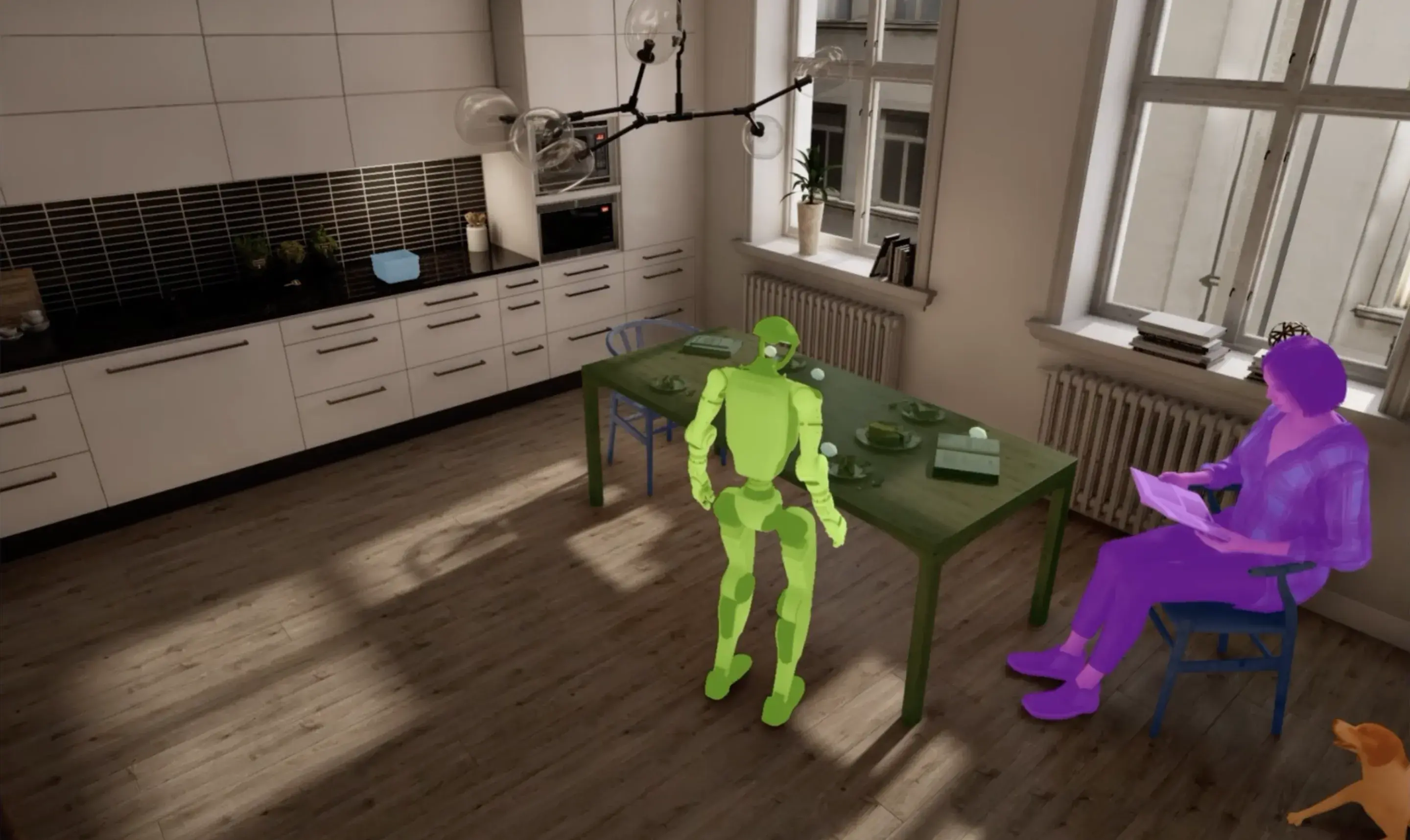
Physical AI is a class of AI systems that operate in the real, three-dimensional world rather than purely in software. They take in data from cameras, LiDAR, force sensors, and microphones, build an internal understanding of the scene, decide what to do, and send commands to motors and actuators. The output is not a paragraph or a chart. It is a movement.
NVIDIA, which did more than anyone to popularize the phrase, describes it as AI that can "perceive, understand, and perform complex actions in the real (physical) world." The useful part of that definition is the word perform. A vision model that flags a defective weld on a screen is computer vision. A system that flags the weld, decides to reroute the part, and moves the arm to do it is physical AI. The line is whether the intelligence closes the loop into action.
Physical AI in simple terms
The simplest way to think about it: physical AI gives machines something like eyes, judgment, and hands, and connects the three. Traditional industrial robots had hands but no eyes and no judgment. They repeated a programmed path with sub-millimeter precision and would happily weld thin air if the part was missing. Classic computer vision gave machines eyes but stopped there. Physical AI is the combination, and the key property it adds is adaptation. A physical AI system handles the situation it has not seen before, or at least handles it better than a scripted one would.
Why physical AI is getting attention now
The idea is old. Robotics researchers have chased adaptive machines since the 1970s. Three things changed recently. First, foundation models learned to handle perception and language together, and that architecture turned out to extend to action: vision-language-action (VLA) models like NVIDIA's Isaac GR00T and Google DeepMind's Gemini Robotics take an image and an instruction and output motor commands. Second, edge compute got fast enough to run these models on the robot itself, at the latency real-world control needs. Third, and this is the part people underrate, simulation matured to the point where a robot can rehearse millions of trials in a physically accurate virtual world before touching real hardware.
The money followed. Deloitte's 2026 Tech Trends report cites UBS estimates that the humanoid robot market alone could reach $30 to 50 billion by 2035, and notes that Goldman Sachs tracked a 40% drop in humanoid manufacturing costs between 2023 and 2024. Amazon crossed one million deployed robots in its fulfillment network. Waymo has completed more than 10 million paid autonomous rides. None of those figures are forecasts anymore.
How Physical AI Works: The Sense–Think–Act Loop
Every physical AI system, whether it is a warehouse robot or a self-driving truck, runs the same loop dozens or hundreds of times per second. Sensors capture the environment. A model interprets it and plans. Actuators execute the plan. New sensor data shows what actually happened, and the loop starts again. Understanding how physical AI works comes down to understanding what happens at each stage and where things break.
Perception: sensors and computer vision
Perception turns raw signals into a structured picture of the world. Cameras provide RGB images, depth sensors and LiDAR provide geometry, IMUs report orientation and acceleration, and force-torque sensors on a gripper report contact. Computer vision models fuse these streams into something the planner can use: object detections with bounding boxes, segmentation masks, 6D pose estimates (position plus orientation), and occupancy maps of free and blocked space.
This stage is where most physical AI failures originate, and the reasons are mundane. Reflective packaging confuses depth sensors. A forklift's headlights blow out a camera at dusk. A new SKU shows up that the detector never saw during training. Perception models are only as good as the variety of conditions they were trained on, which is why the data question comes up again and again in this field.
Reasoning and planning: world models and VLA models
Once the system has a picture of the scene, it needs to decide what to do. Two approaches dominate current work. The first is the VLA model, which maps perception plus a task ("put the blue bin on the top shelf") directly to a sequence of actions, learned from large datasets of demonstrations. The second is the world model, which learns to predict how a scene will evolve, so the planner can imagine the consequences of a candidate action before committing to it. The two are not competitors; the strongest stacks use a world model to evaluate what a VLA model proposes. There is a longer treatment of that relationship in our piece on world models vs 3D simulation for physical AI.
Underneath both sit older, still essential tools: motion planners that compute collision-free trajectories, and reinforcement learning, which trains control policies by trial and error. RL is how a robot hand learns to reorient a cube or a quadruped learns to recover from a slip. It needs an enormous number of attempts, far more than any physical robot could survive, which is the main reason it is almost always done in simulation.
Action: actuators, control, and real-time feedback
The plan becomes physical through actuators: electric motors in joints, hydraulic cylinders, grippers, steering and braking systems. A low-level controller translates "move the end effector here" into torque commands at each joint, hundreds of times per second, correcting against sensor feedback the whole time. This is the layer where physics stops being a training abstraction. Contact forces, backlash in gears, latency between command and motion, and the simple fact that a 20-kilogram payload changes the arm's dynamics all show up here. A system that reasons well but controls poorly drops things.
Core Components of a Physical AI System
Vendors slice this differently, but a working physical AI deployment has six parts, and each one has its own failure modes.
ComponentWhat it doesTypical examplesSensorsCapture the environment as dataRGB and stereo cameras, LiDAR, radar, IMUs, force-torque sensors, tactile skinsPerception modelsTurn sensor data into objects, poses, and mapsDetection, segmentation, depth estimation, 6D pose, SLAMReasoning and planningDecide what to do nextVLA models, world models, motion planners, RL policiesActuators and hardwareExecute motion in the worldRobot arms, mobile bases, grippers, humanoid platforms, vehicle drivetrainsEdge computeRun models at control-loop latency on the machineNVIDIA Jetson-class modules, automotive SoCs, embedded GPUsTraining and simulation infrastructureProduce the data and rehearsal environment the models learn fromPhysics simulators, digital twins, synthetic data pipelines, GPU training clusters
The last row is the one most introductory guides leave out, and it is where the majority of engineering time in a real program goes. Building the robot is a hardware problem with known solutions. Producing enough diverse, correctly labeled data to make the robot reliable across the conditions it will meet is the part that keeps stalling.
Physical AI vs Generative AI, Embodied AI, Robotics, and Digital Twins
The terminology around this field is messy, partly because several of these terms came from different communities that only recently started talking to each other. These are the distinctions that actually matter.
Physical AI vs generative AI
Generative AI produces content: text, images, code, video. Physical AI produces actions. They share the same underlying transformer architectures and, increasingly, the same training methods, which is why NVIDIA sometimes calls the field "generative physical AI." But the outputs are judged by completely different standards. A generated image with a six-fingered hand is a curiosity. A grasp plan with the wrong contact point breaks a part. Generative AI also feeds physical AI in a specific way: generative world models can synthesize training scenarios, and language models provide the natural-language interface that lets an operator tell a robot what to do.
Physical AI vs embodied AI
Embodied AI is the academic research program behind much of this. It holds that intelligence emerges from having a body and interacting with an environment, and it studies learning through that interaction. Physical AI is the industry framing of the same idea, oriented toward deployable systems and specific tasks. In practice the terms overlap almost completely. If you are reading a paper, it will say embodied. If you are reading a product page, it will say physical.
Physical AI vs traditional robotics
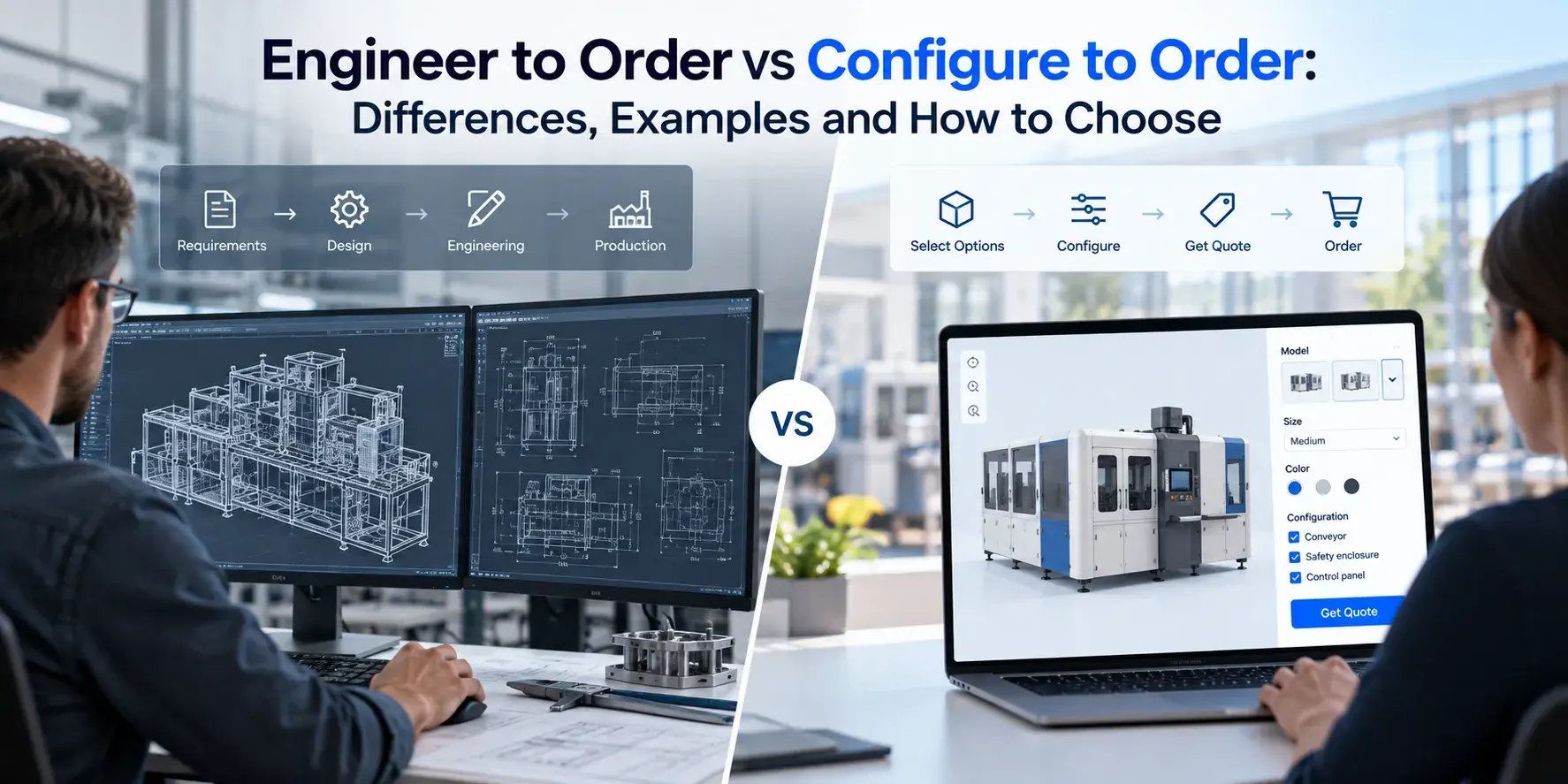
Traditional industrial robotics is deterministic. An engineer programs a path, the robot repeats it, and the environment is engineered to make sure nothing varies: fixtures hold parts in exact positions, cages keep people out. Physical AI inverts this. The environment varies, and the robot adapts. That shift is what allows robots to leave the cage and work in warehouses, hospitals, and fields where nothing is fixtured. It also means the robot's behavior is learned rather than specified, which changes how you validate it, a point we return to under challenges.
Physical AI vs digital twins
A digital twin is a virtual replica of a physical asset or facility, kept in sync with the real thing through sensor data. It is a model of the world, not an agent acting in it. The two connect closely, though: a high-fidelity digital twin of a warehouse is exactly the environment you want to train and test a warehouse robot in before deployment. Think of the twin as the training ground and the physical AI system as the trainee.
Real-World Examples of Physical AI
Physical AI examples are easiest to understand by sector, because the operating conditions and the failure costs vary so much.
Manufacturing and quality inspection
Collaborative robots doing precision assembly, bin picking of unsorted parts, and vision-guided welding are the mature cases. The interesting shift is in inspection. Older inspection systems flagged defects against a fixed reference image. Physical AI inspection systems recognize defect categories they were trained on, across lighting and part variations, and can trigger a physical response: rejecting the part, adjusting an upstream process, or repositioning for a second look. Manufacturers are increasingly training these models on synthetic renders of defects because real examples of a rare scratch or void are, by definition, rare.
Warehouses and logistics
This is the sector with the deepest deployment. Amazon's Proteus autonomous mobile robots navigate around human workers without fixed paths. Picking arms handle tens of thousands of SKUs with different shapes, weights, and packaging. Sorting systems route parcels at high speed based on real-time vision. Outside the building, sidewalk delivery robots from companies like Starship handle curbs, pedestrians, and weather. The common thread is unstructured variety: no two totes are packed the same way, and the robot has to cope.
Autonomous vehicles
Self-driving cars are physical AI at the largest scale and the highest stakes. The perception stack fuses cameras, radar, and LiDAR to detect vehicles, pedestrians, and lane geometry; the planner predicts what other road users will do and chooses a trajectory; the control layer executes steering, throttle, and braking. Waymo's 10 million paid rides is the proof point that the loop can run reliably enough for commercial service. The same stack, with different sensors and rules, drives autonomous mining trucks, port vehicles, and agricultural tractors.
Healthcare
Surgical robots have used teleoperation for two decades; the physical AI layer is now adding autonomous sub-tasks like suturing and tissue retraction under surgeon supervision. Hospital logistics robots deliver supplies and medications through corridors shared with staff and patients. Rehabilitation exoskeletons adapt their assistance to a patient's gait in real time. The regulatory bar here is the highest of any sector, which makes healthcare a useful stress test for the validation methods the whole field needs.
Agriculture and construction
Weeding robots identify individual plants and remove weeds mechanically or with targeted micro-doses, cutting herbicide use. Harvesting robots handle soft fruit that would have been impossible to grip a few years ago. In construction, autonomous excavators, bricklaying arms, and drones for site surveying operate in environments that change daily and are dangerous for people. Both sectors share a data problem: crops, soil, weather, and site conditions vary so much that no real-world dataset ever covers them.
Why Data Is the Bottleneck for Physical AI
Ask a team running a physical AI program where their time goes and the answer is rarely the model architecture. It is data: getting enough of it, getting it labeled, and getting the coverage of situations that matter. This deserves its own section because it explains most of the gap between an impressive demo and a deployed system.
Real-world data is slow, expensive, and misses edge cases
A language model trains on the entire written internet. A physical AI model trains on recordings of a robot interacting with the world, and that data does not exist until someone creates it. Collecting it means running physical hardware, hour after hour, with human operators and safety oversight. Labeling it means annotating 3D poses, segmentation masks, and depth by hand, which is far more expensive per frame than tagging a photo.
Worse, the situations you most need in the dataset are the ones you can least afford to collect. You cannot stage a thousand near-collisions between a forklift and a worker. You cannot wait for the one-in-ten-thousand defect to show up on the line often enough to train on. You cannot drive a car through every combination of snow, glare, and construction zone. The rare and dangerous cases are where physical AI systems fail, and they are structurally underrepresented in real data. There is a practical walkthrough of this problem in our guide on generating edge cases for computer vision models.
Simulation and synthetic data as the training ground
The industry's answer is to manufacture the data. A physics-based 3D simulation renders scenes with controllable variation, lighting, object placement, materials, camera angles, sensor noise, and produces every label automatically, because the simulator already knows the exact position of every object it rendered. Bounding boxes, segmentation masks, depth maps, 6D poses, and point clouds come out perfectly accurate, at a cost per frame that is a small fraction of manual annotation.
Simulation also solves the rare-case problem directly. If you need ten thousand examples of a specific failure, you generate ten thousand. Domain randomization, varying textures, lighting, and geometry across the dataset, pushes models to learn the features that matter rather than the incidental ones, which improves how they generalize to the real world. Reinforcement learning policies train almost entirely this way: a simulated robot can attempt a task millions of times overnight on a GPU cluster, something no fleet of physical robots could match. NVIDIA's physical AI glossary describes this three-computer pattern explicitly: one system to train, one to simulate and generate synthetic data, one to run on the robot.
Synthetic data does not replace real data. It fills the parts of the distribution real data cannot reach, and the two are combined in most production pipelines. We cover the trade-offs in detail in synthetic data vs real data.
The sim-to-real gap and how teams close it
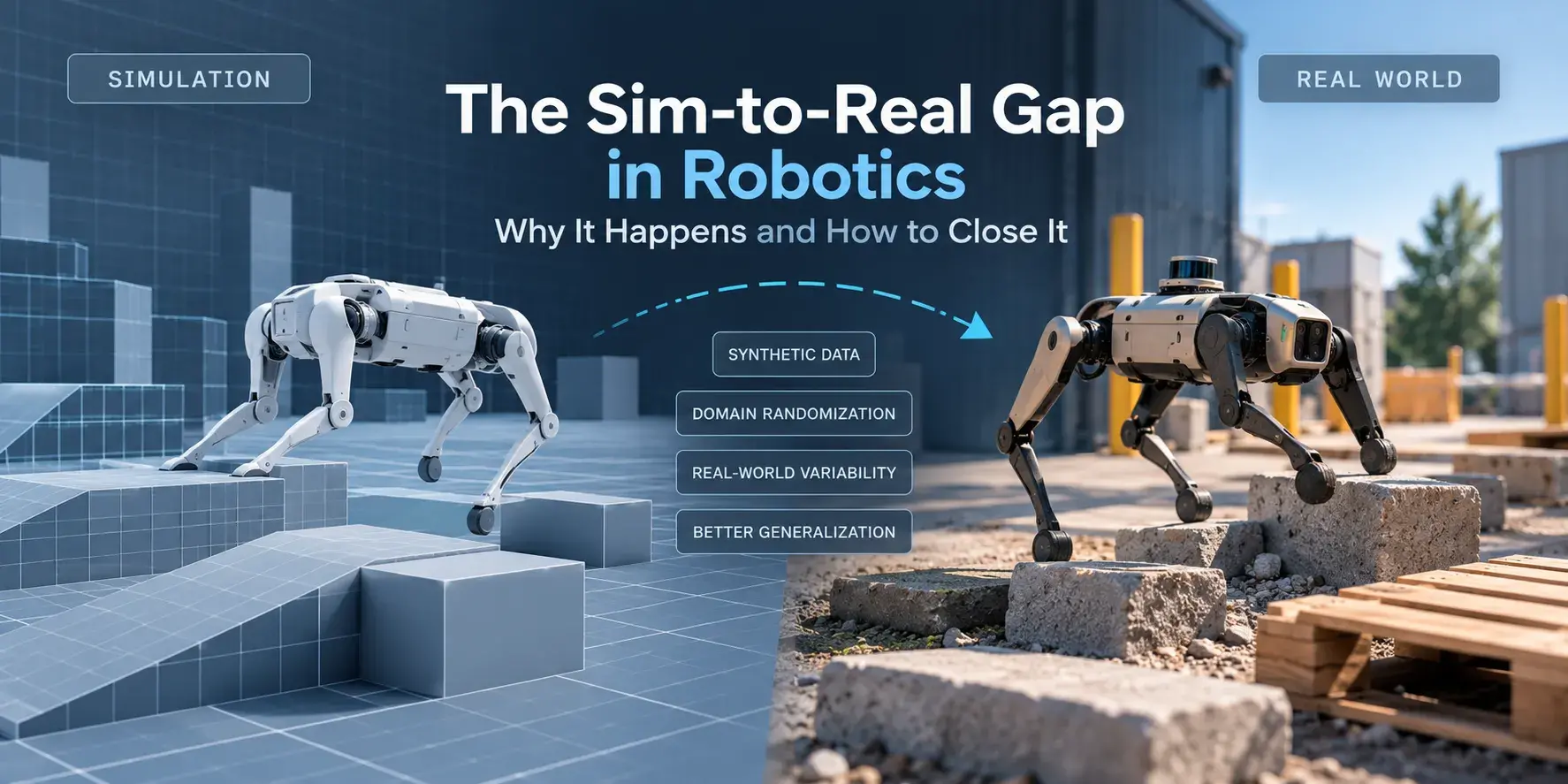
Simulation has one well-known weakness: the model may learn to succeed in the simulator and fail on the real robot, because the simulator differs from reality in ways the model latched onto. This is the sim-to-real gap. It shows up as perception models that fail on real sensor noise, or control policies that overfit to a simulated friction coefficient.
Closing it is a discipline in itself. On the visual side, teams push simulation fidelity with physically based rendering and real material scans, then add randomization so the model cannot rely on any single rendering quirk. On the dynamics side, they calibrate the simulator against real measurements and randomize physical parameters like mass and friction so policies become robust to the difference. And they validate on real hardware early and often, using the real-world failures to decide what to simulate next. Teams that treat simulation as a one-time data dump struggle with the gap; teams that run simulation and real testing as a loop mostly do not.
The Physical AI Development Stack
Put the pieces together and a typical physical AI program looks like a pipeline rather than a single model. It starts with 3D assets: accurate models of the objects, tools, and environments the system will encounter, usually built from CAD files, scans, or procedural generation, and prepared so they are simulation-ready with correct scale, materials, and physical properties. Those assets populate a simulated environment, often a digital twin of the real facility, where scenarios are staged and varied.
The simulation generates synthetic datasets with automatic ground truth, exported in the formats training frameworks expect (COCO, YOLO, KITTI, and so on) across RGB, depth, LiDAR-style, and multi-camera modalities. Perception models train on that data, mixed with whatever real data exists. Control policies train in the same simulator through reinforcement learning or imitation. Everything is validated first in simulation, then on hardware, and the results feed back into which assets and scenarios get built next.
The asset layer is the part that decides how good everything downstream can be. A simulation is only as realistic as the objects in it, and a synthetic dataset inherits every shortcut taken in the 3D models. This is the layer Vivid3D works on: simulation-ready 3D assets, synthetic visual data with automatic annotations, and the computer vision workflows that connect them, described in more depth on our page on robotics and physical AI infrastructure. The earlier article on synthetic 3D data for robotics training walks through the same pipeline from the robotics side.
Challenges and Limitations
The field has real momentum and real unsolved problems, and it is worth being clear about which is which.
Safety and validation come first. A learned policy has no specification you can inspect, so proving it will behave correctly across all conditions is fundamentally harder than verifying scripted code. The current answer is statistical, testing across enormous numbers of simulated and real scenarios, plus hard safety layers that override the learned system when it approaches a limit. Regulators in automotive and healthcare are still working out what evidence they will accept.
Generalization is the second. Today's systems perform well within the distribution they were trained on and degrade outside it. A picking robot trained on one warehouse's SKUs needs retraining for another's. VLA models are improving this, but the general-purpose robot that handles any task in any environment remains a research goal, not a product.
Hardware cost and reliability constrain deployment. Sensors, actuators, and compute add up, and mechanical components wear in ways software does not. Deloitte's analysis expects humanoid unit costs to fall from roughly $35,000 in 2025 toward $13,000 to 17,000 within a decade, which is the trajectory that would make broad deployment economical, but it is a projection.
And the data bottleneck described above does not go away. It gets managed. Every new environment, task, and sensor configuration brings a new coverage problem, and the teams that scale are the ones with a repeatable pipeline for producing training data rather than a one-off dataset.
The Future of Physical AI
Three directions are worth watching, with appropriate skepticism about timelines.
Humanoid robots attract the most attention because a human-shaped machine can in principle use human tools and spaces without modification. Several companies now have units in pilot deployments in warehouses and factories. Deloitte's 2026 Tech Trends analysis is candid that consumer humanoids are at least a decade out, while industrial use is proceeding now. That split, enterprise first and homes much later, is probably the right expectation.
Autonomous factories and warehouses are closer. The combination of mobile robots, vision-guided arms, and fleet-level AI that coordinates them is already running in the most advanced facilities, and the trend is toward fewer fixed processes and more adaptive ones. Amazon's DeepFleet model, which optimizes robot traffic across its network, is an early example of AI managing a population of physical AI systems.
The deepest change is in how these systems learn. Foundation models for robotics, trained across many robot types and tasks, are starting to show the kind of transfer that language models showed years ago: a skill learned on one platform helping on another. If that holds, the marginal cost of teaching a robot a new task drops sharply. It also raises the stakes on training data further, because the value of a foundation model depends on the breadth and correctness of what it learned from, and for physical AI, a large share of that will be simulated.
What is physical AI, then, in the end? It is the point where machine learning stops being a tool for understanding the world and becomes a participant in it. The models are advancing fast. The machines that carry them are getting cheaper. The remaining work, and most of the remaining engineering effort, is building the data and simulation infrastructure that lets those models learn the physical world well enough to be trusted in it.
Frequently Asked Questions
What is physical AI in simple terms?
Physical AI is artificial intelligence that can see the real world through sensors, decide what to do, and take action through a machine such as a robot or vehicle. Unlike a chatbot, its output is a physical movement rather than text.
How does physical AI work?
It runs a continuous loop: sensors capture the environment, perception models turn that data into a map of objects and space, a planning model chooses an action, and actuators carry it out. New sensor readings show the result and the loop repeats, often hundreds of times per second.
Is physical AI the same as robotics?
No. Robotics is the hardware and control discipline; physical AI is the learned intelligence that lets a robot adapt to situations it was not explicitly programmed for. Many industrial robots contain no physical AI at all, and physical AI also runs in vehicles, drones, and smart infrastructure that are not typically called robots.
What is the difference between physical AI and generative AI?
Generative AI creates content such as text, images, and video. Physical AI produces actions in the real world. They share similar model architectures, and generative models are increasingly used to create simulated environments and training data for physical AI systems.
What are examples of physical AI?
Autonomous mobile robots in warehouses, self-driving vehicles, vision-guided robotic arms for assembly and inspection, surgical robots with autonomous sub-tasks, agricultural weeding and harvesting robots, and delivery drones are all examples of physical AI in production use.
What is a world model in physical AI?
A world model is a learned model that predicts how a scene will change over time, including in response to the robot's own actions. Planners use it to evaluate candidate actions before executing them. World models are typically trained on a mix of real video and physically accurate simulation.