When teams building physical AI weigh world models vs 3D simulation, they are really choosing between two ways of predicting what happens next in the real world. A 3D simulator computes the future from engineered physics rules. A world model learns to predict it from data. Both feed robots, autonomous vehicles, and computer vision systems, and in most serious pipelines they end up working together rather than replacing each other.
This guide breaks down how each approach represents the world, where each one is stronger, and how to decide which belongs in your stack.
World models and 3D simulation, defined
What a world model is
A world model is an AI system trained to predict how an environment will change, ideally conditioned on an agent's own actions. Instead of reacting only to the current sensor frame, it reasons about objects, space, time, and cause and effect. Ask it what happens if a robot pushes a box left instead of right, and it forecasts the likely outcome so the system can compare choices before committing to one.
The prediction does not have to be video. A world model might output future object poses, occupancy grids, latent features, contact events, or a reward estimate. Video is just the most eye-catching format, and a visually convincing frame can still hide wrong depth or physics. NVIDIA's Cosmos family and Google DeepMind's Genie line are current examples that generate and reason about physical-world scenarios from learned data.
What 3D simulation is
A 3D simulator evolves a modeled scene using explicit rules: rigid-body dynamics, collision handling, material properties, sensor and camera models. You build the environment, define the physics, and the engine computes what follows. Because you author every asset and constraint, you control exactly what the scene contains and can replay any moment with perfect repeatability.
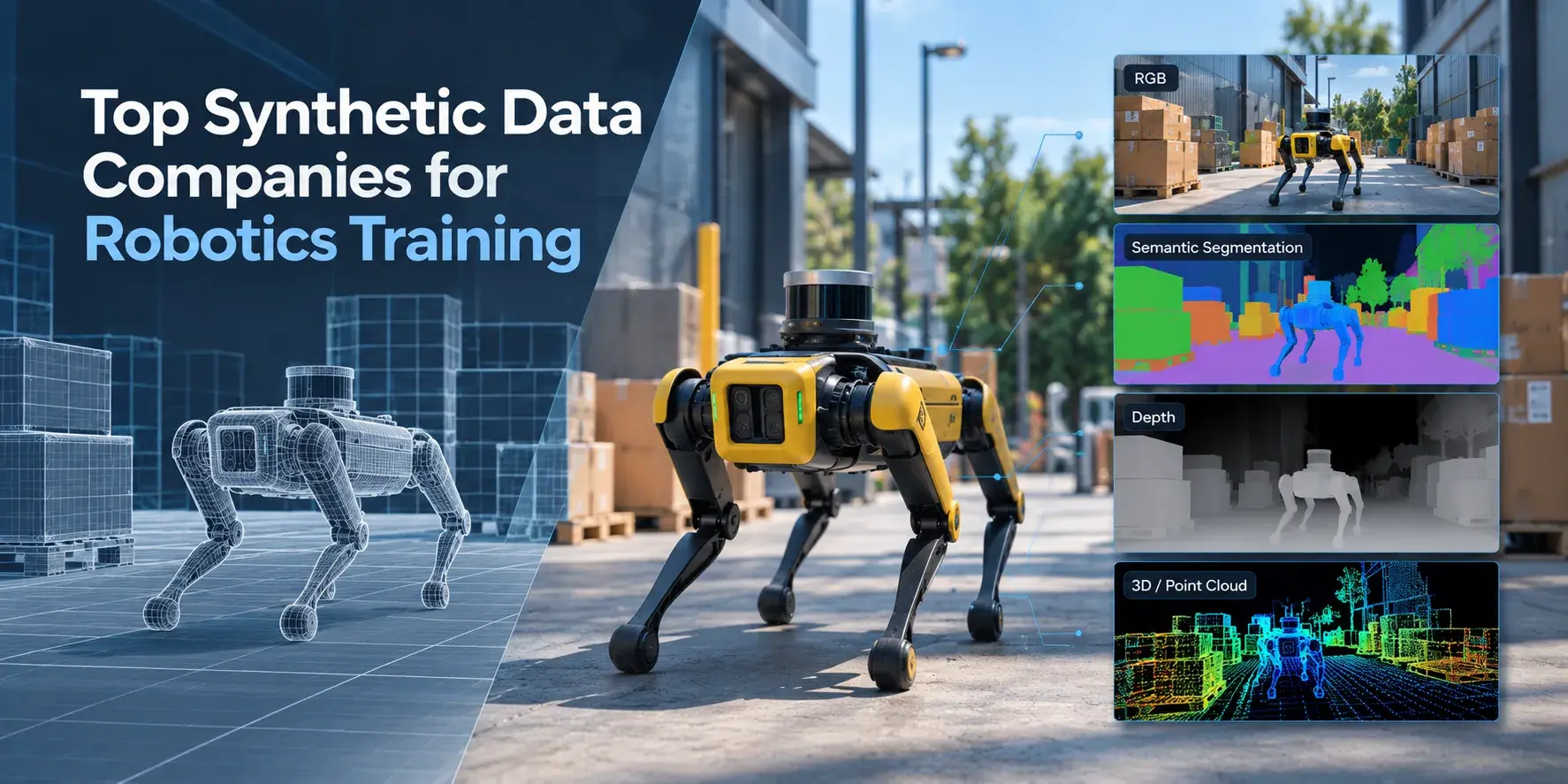
This is the same lineage as game engines and digital twins, tuned for accuracy rather than frame rate. It powers the synthetic data pipelines that train perception models today, where a rendered scene comes with pixel-perfect labels for free.
The core difference: learned prediction vs engineered physics
The split comes down to where the knowledge lives. In a simulator, a human encodes the rules. Friction, mass, joint limits, and light transport are specified up front, so the output is only as good as the model you wrote, but it is transparent and consistent. In a world model, the rules are absorbed from data. Nobody hand-writes how a cloth folds or how a pedestrian hesitates at a curb. The network infers those patterns from what it has seen.
That difference cascades into everything else. Engineered physics gives you determinism and inspectability at the cost of manual authoring effort. Learned prediction gives you visual richness and messy real-world behavior that is hard to script, at the cost of interpretability and guarantees. Neither is universally better. They fail in opposite ways, which is exactly why they pair well.
World models vs 3D simulation compared
Here is how the two approaches stack up across the axes that matter when you are validating a physical AI system.
| Dimension | 3D simulation | World models |
|---|
| Physics accuracy | Exact within the modeled rules; strong on contacts, forces, kinematics | Approximate; visually plausible futures can violate real dynamics |
| Controllability | Full; you place every object, light, and parameter | Partial; conditioned on prompts or actions, harder to pin down exactly |
| Data coverage | Limited by assets you build, but scalable through procedural variation | Broad visual variation learned from large datasets, weak on unseen cases |
| Labels | Automatic and pixel-perfect (depth, segmentation, poses) | Not inherently labeled; needs separate annotation |
| Interpretability | High; state is explicit and auditable | Low; latent predictions are hard to debug |
| Sim-to-real gap | Real, from imperfect physics and rendering | Real, from data bias and hallucinated dynamics |
| Setup cost | Higher upfront; asset and scene authoring | Higher in compute and training data collection |
Where 3D simulation wins
Simulation is the safer choice whenever the outcome has to be correct, not just believable. Manipulation is the clearest case. When a gripper closes on an object, the difference between a successful grasp and a dropped part comes down to contact forces and friction that a physics engine models directly and a video predictor tends to smear over.
It also wins on labeled data at scale. A rendered warehouse can produce thousands of images with exact bounding boxes, segmentation masks, and depth maps that no human annotator touched. That is why so much perception training leans on it, and why teams generating rare failure cases prefer authored scenes they can control. If you need ten thousand variations of a defect under different lighting, procedural simulation delivers them on demand, an approach worth reading about in this breakdown of how to generate edge cases for computer vision models.
Finally, simulation is auditable. When something goes wrong, you can inspect the exact state, replay it, and trace the cause. Safety reviewers and regulators tend to want that, and a learned black box does not offer it.
Where world models win
World models shine where the real world is too varied or too subtle to author by hand. Human behavior is the standout. Modeling how a cyclist drifts, how a shopper reaches, or how a crowd flows around an obstacle is nearly impossible to script convincingly, yet a model trained on real footage picks up those patterns.
They also compress data collection. Rare and long-tail events are expensive to reproduce safely in the real world and tedious to build asset by asset. A world model that has seen enough driving can generate variations of a near-miss without anyone staging one. Tesla, for instance, uses learned world models to construct possible futures and evaluate risky maneuvers before they happen.
And they generalize across scenes in a way that hand-built environments struggle to match. One model can adapt to lighting, weather, and object variation it was never explicitly programmed for, which is why they are increasingly used as a foundation to specialize per robot or vehicle. NVIDIA frames open world models as exactly this kind of adaptable base for physical AI, generating training data and testing policies at a scale pure authoring cannot reach.
When to use which for physical AI
The decision usually tracks the task, not a preference. For contact-rich robotics such as grasping, assembly, or insertion, start with high-fidelity 3D simulation, because getting the physics wrong there means the policy fails on hardware. For perception training that needs guaranteed labels, simulation again, since the annotations come for free and stay consistent.
For autonomous driving and navigation in crowded, unpredictable settings, world models earn their place by covering behavioral variety that no scene author can enumerate. For long-tail scenario generation, whether a rare road event or an unusual defect, a world model can propose futures fast, though you still validate the important ones against physics.
A useful habit is to separate what predicts the future from how the decision gets verified. Let the cheaper, broader method propose, and let the accurate, inspectable method check. In practice that means most teams building robots or vehicles run both, which points straight to the hybrid setup that has become the default in serious pipelines. You can see the same logic play out in the wider tradeoff between synthetic data and real data.
The hybrid approach: simulation-generated data plus world models
The strongest physical AI stacks stop treating this as a versus question. They chain the two. Physically accurate 3D simulation generates large volumes of labeled, controllable synthetic data, and that data trains or grounds the world model that later reasons over messier real inputs. Simulation supplies the physics and the free labels. The learned model supplies breadth and real-world nuance. The sim-to-real gap shrinks from both sides.
This is the pipeline Vivid3D is built around. Its Simulation Generator produces physically grounded 3D scenes with automatic annotations, and those feed the CV AI pipelines that train perception and policy models for robotics and industrial vision. Because the scenes are authored, teams control exactly which edge cases, lighting conditions, and object variations appear in the training set, then use learned models on top to generalize. Teams working on embodied systems can see how this fits together on the robotics and physical AI infrastructure page, and the data side is covered in more depth under synthetic data for computer vision.
The practical takeaway for 2026 is simple. Choose simulation when you need correctness, labels, and auditability. Reach for world models when you need behavioral breadth and long-tail coverage. Combine them when you need a system that actually holds up on real hardware.
Frequently asked questions
Can a world model replace a 3D physics simulator?
Not fully today. A world model can approximate selected dynamics or visual outcomes, but explicit simulation stays better for precise contacts, hard constraints, and interpretability. Most teams treat them as complementary, using simulation for physics-critical validation and world models for scenario breadth.
Is a world model the same as a digital twin?
No. A digital twin usually mirrors one specific asset or process using its operational data. A world model is a broader prediction mechanism that may be learned across many environments and is not tied to a single physical system.
Does a world model need to generate video?
No. Video is one possible output, but a world model can instead predict object states, occupancy, contact events, rewards, or latent features. The right output depends on what the downstream planner needs to make a decision.
Which is better for training robots?
For contact-heavy manipulation, 3D simulation gives more reliable physics and free labels. For behavior-rich navigation, world models add variety that is hard to author. Robust robot training in 2026 usually blends simulation-generated data with learned models.
How do synthetic data and world models work together?
Simulation produces labeled, controllable synthetic data that trains or grounds a world model. The model then generalizes to real inputs the authored scenes never covered. This split lets teams keep control over edge cases while still benefiting from learned generalization.